Vibecoding and No-Code/Low-Code: The Future of Development in 2026
An exploration of how vibecoding and no-code/low-code platforms are revolutionizing software development, making it more accessible, agile, and cost-effective for businesses in 2026.

March 13, 2026
Vibecoding and No-Code/Low-Code: The Future of Development in 2026
Traditional software development, with its long cycles and the need for coding specialists, is giving way to more agile and accessible approaches. Vibecoding, combined with no-code and low-code platforms, enables users with different levels of technical knowledge to create applications and automate processes quickly and efficiently. This article explores the trends for 2026 and highlights some of the Brazilian tools that are leading this revolution.
What is Vibecoding and why is it growing?
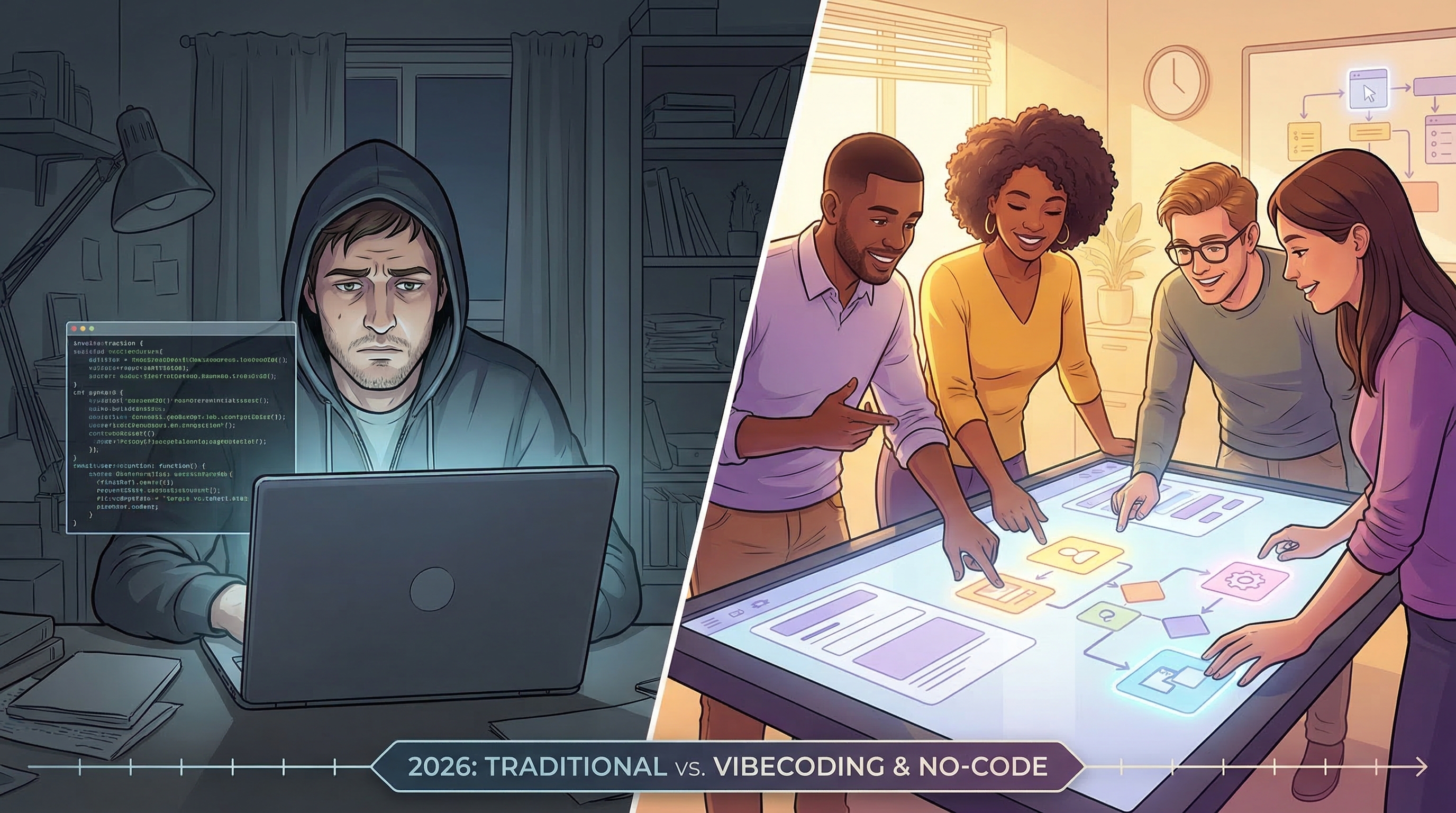
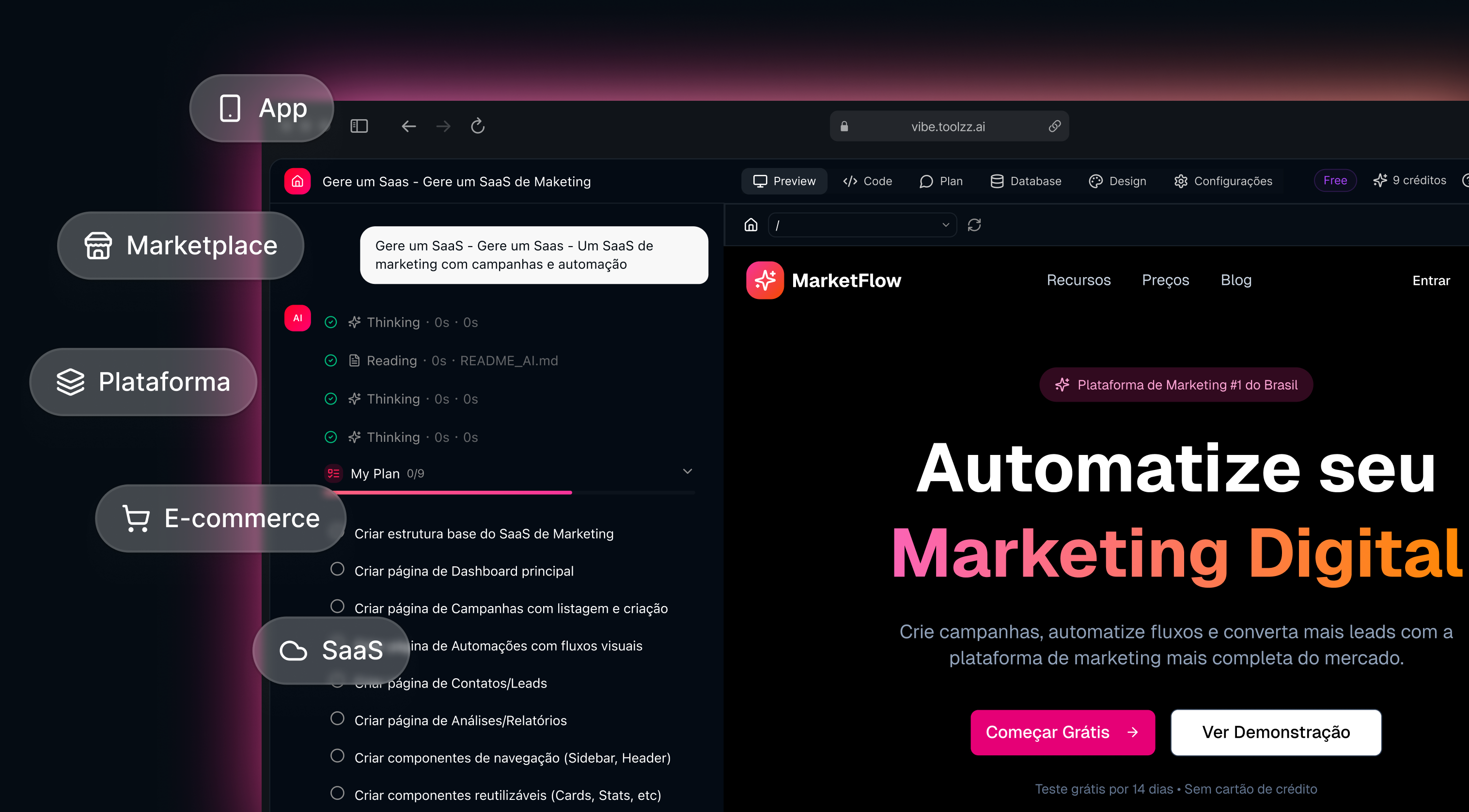
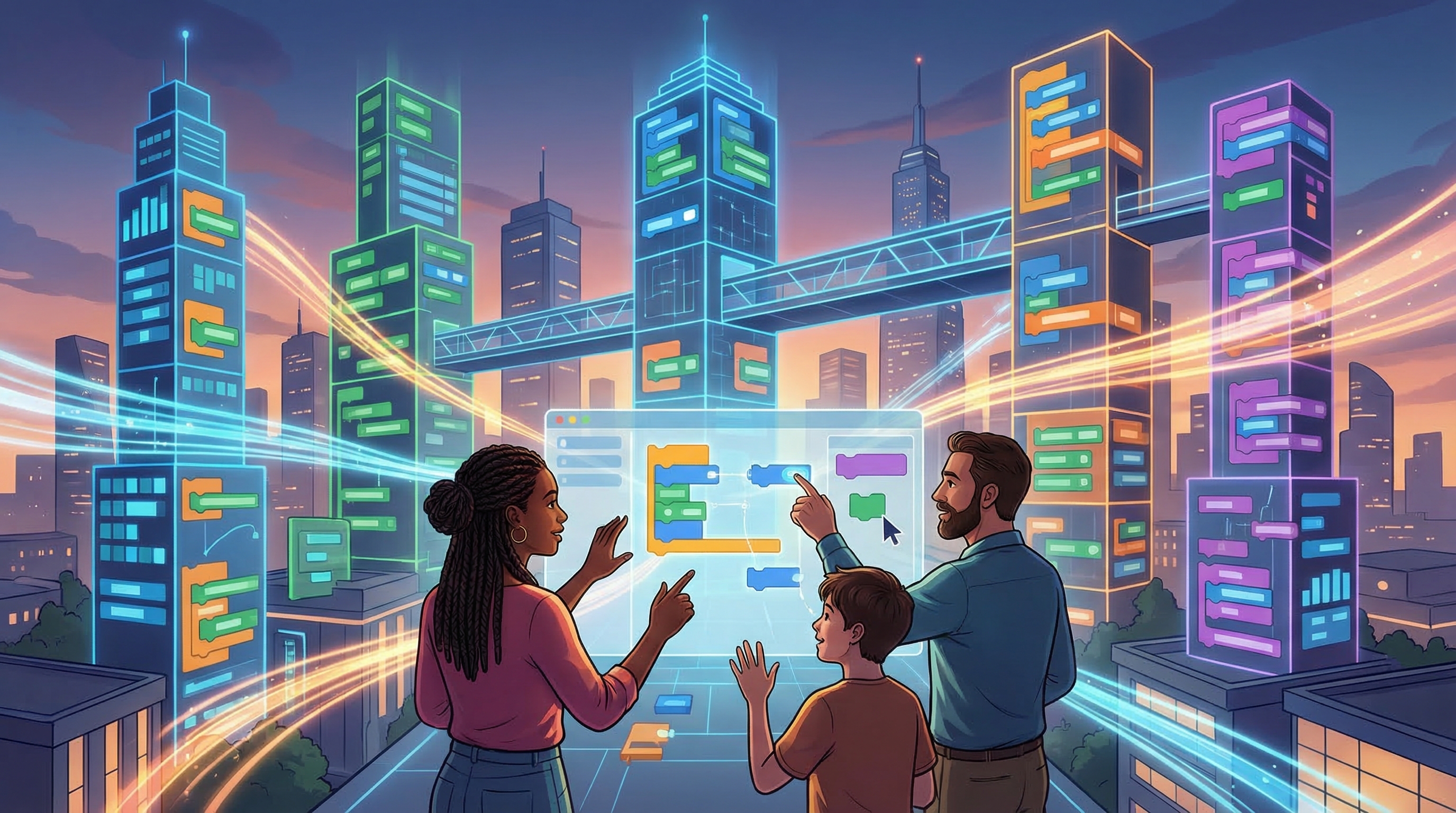
Vibecoding is a development approach that emphasizes intuition and creativity in the software creation process. Instead of focusing on syntax and complex programming logic, vibecoding allows users to concentrate on the user experience and problem-solving itself. This is made possible by no-code and low-code platforms, which offer visual interfaces and pre-built components to facilitate development.
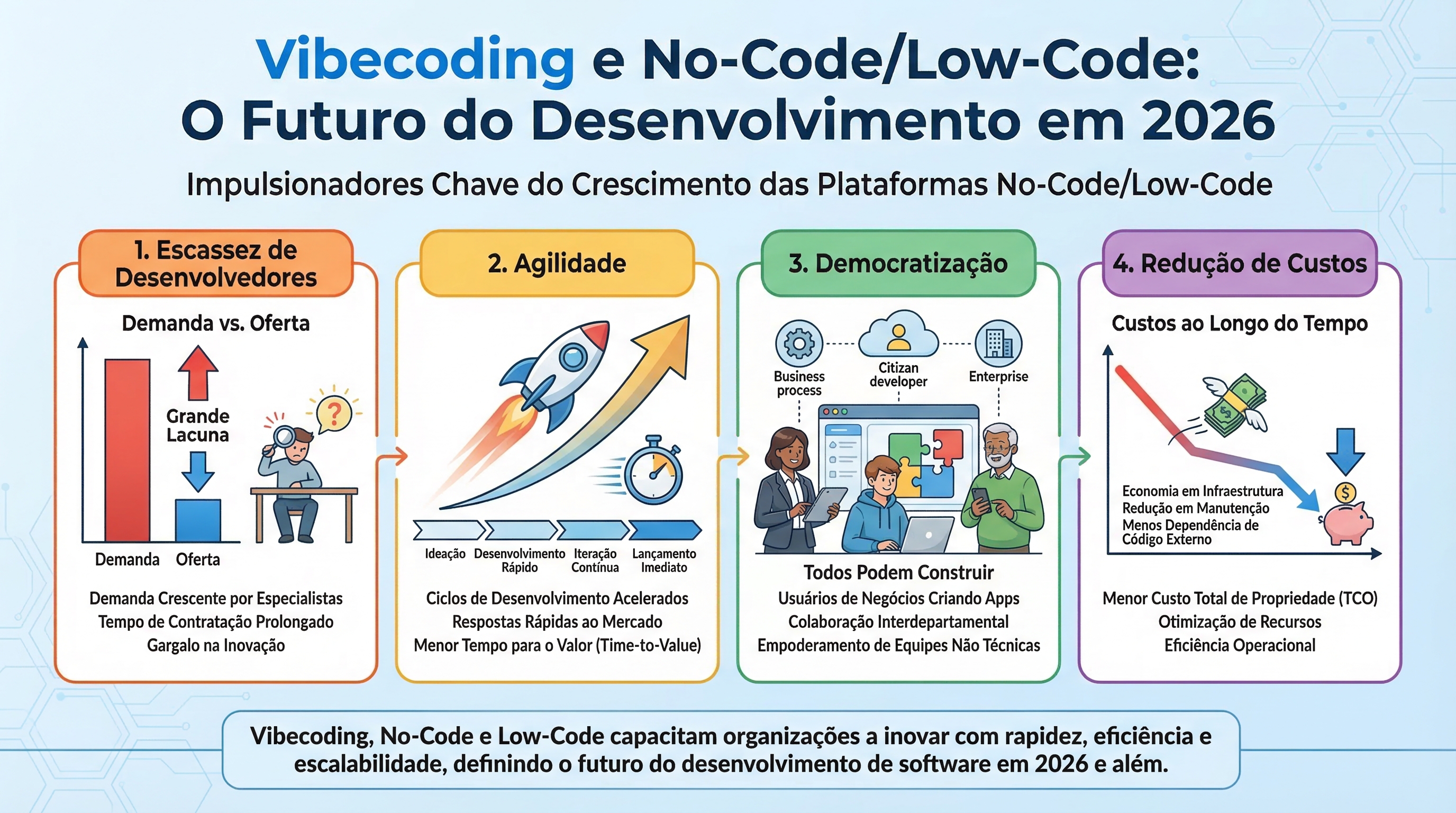
The growth of vibecoding and no-code/low-code platforms is driven by several factors:
- Developer shortage: The demand for qualified developers exceeds supply, making traditional development more expensive and time-consuming.
- Agility: No-code/low-code platforms allow companies to create and deploy applications more quickly, responding to market changes with greater agility.
- Democratization of development: Business users, analysts, and other professionals without programming skills can create their own applications and automate repetitive tasks.
- Cost reduction: By reducing dependence on specialized developers, no-code/low-code platforms can help companies reduce development costs.
No-Code/Low-Code Trends for 2026
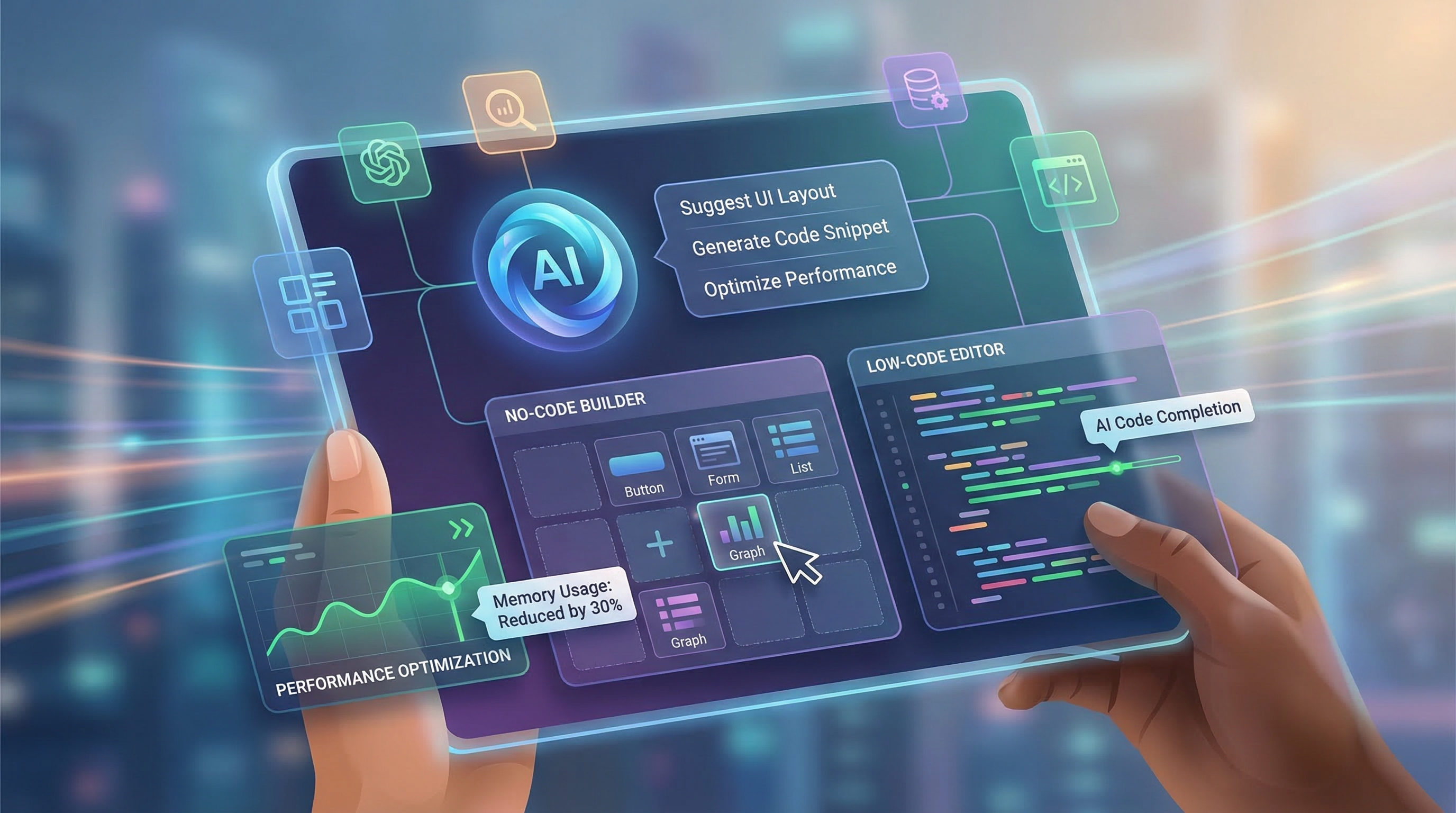
No-code and low-code platforms are constantly evolving. For 2026, we can expect the following trends:
- Integrated Artificial Intelligence (AI): AI will be increasingly integrated into no-code/low-code platforms, automating complex tasks such as creating user interfaces and generating code.
- Hyperautomation: The combination of RPA (Robotic Process Automation), AI, and no-code/low-code platforms will enable companies to automate their business processes end-to-end.
- Collaborative development: No-code/low-code platforms will facilitate collaboration between developers and business users, allowing them to work together in creating applications.
- Deeper integrations: No-code/low-code platforms will offer deeper integrations with other tools and systems, allowing companies to create applications that seamlessly connect to their existing ecosystems.
- Focus on personalized experiences: No-code/low-code platforms will enable companies to create personalized experiences for their customers, based on their data and preferences.
Want to explore the future of automation? Schedule a Toolzz demonstration and discover how integrated AI can transform your processes.
Brazilian No-Code/Low-Code Tools
Brazil is becoming an innovation hub in no-code and low-code. Some of the Brazilian tools that stand out include:
- Appy Pie: No-code platform for creating mobile apps, websites, and chatbots.
- Softr: Allows creating web applications from Google Sheets or database data.
- Take Blip: Leading Brazilian platform in chatbots and conversational communication, with no-code resources for creating conversation flows.
- Mural: Visual collaboration tool that allows creating user interface prototypes and workflows.
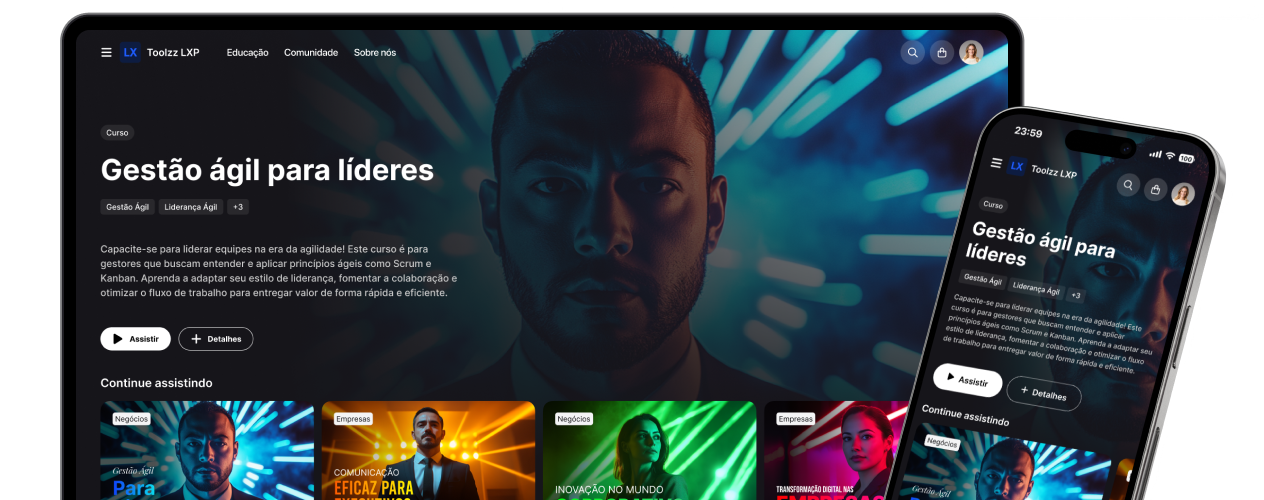
- Toolzz: Complete AI Agents and Corporate Education platform that combines LXP, AI, Bots, Voice, and Chat functionalities, with no-code resources for customization and automation.
With Toolzz, for example, it's possible to create personalized AI agents without needing to write a single line of code, using an intuitive and visual interface. This allows companies to implement more efficient and personalized customer service solutions.
Benefits of Vibecoding and No-Code/Low-Code for Companies
Adopting vibecoding and no-code/low-code platforms can bring several benefits to companies:
- Increased productivity: Automate repetitive tasks and free your employees to focus on more strategic activities.
- Cost reduction: Decrease dependence on specialized developers and accelerate the time to market for new products and services.
- Accelerated innovation: Experiment with new ideas and create prototypes quickly, without requiring large investments in development.
- Improved customer experience: Create applications and automations that personalize the customer experience and increase their satisfaction.
- Empowerment of business users: Allow your employees to create their own solutions to the problems they face. If you seek to empower your business users, schedule a conversation with our specialists.
Conclusion
Vibecoding and no-code/low-code platforms represent a fundamental shift in how applications and automations are developed. By democratizing development and enabling users with different levels of technical knowledge to create their own solutions, these tools are driving innovation and agility in companies. In 2026, the integration with AI and hyperautomation is expected to make these platforms even more powerful and accessible, transforming the future of software development.


















.webp)