7 Steps to Optimize Prospecting with AI SDR
A practical guide presenting seven actionable steps to reduce friction in B2B prospecting using AI SDR, focusing on process optimization and increasing qualified meeting generation.


March 14, 2026
7 Steps to Optimize Prospecting with AI SDR
Prospecting is the growth engine of any B2B company, but it can be a slow, expensive, and frustrating process. Artificial intelligence (AI) is transforming the way sales teams approach prospecting, automating repetitive tasks and freeing SDRs to focus on high-value interactions. This guide presents seven practical steps to reduce friction in prospecting using the power of AI SDR, with a focus on process optimization and increasing qualified meeting generation.
The Evolving Prospecting Landscape
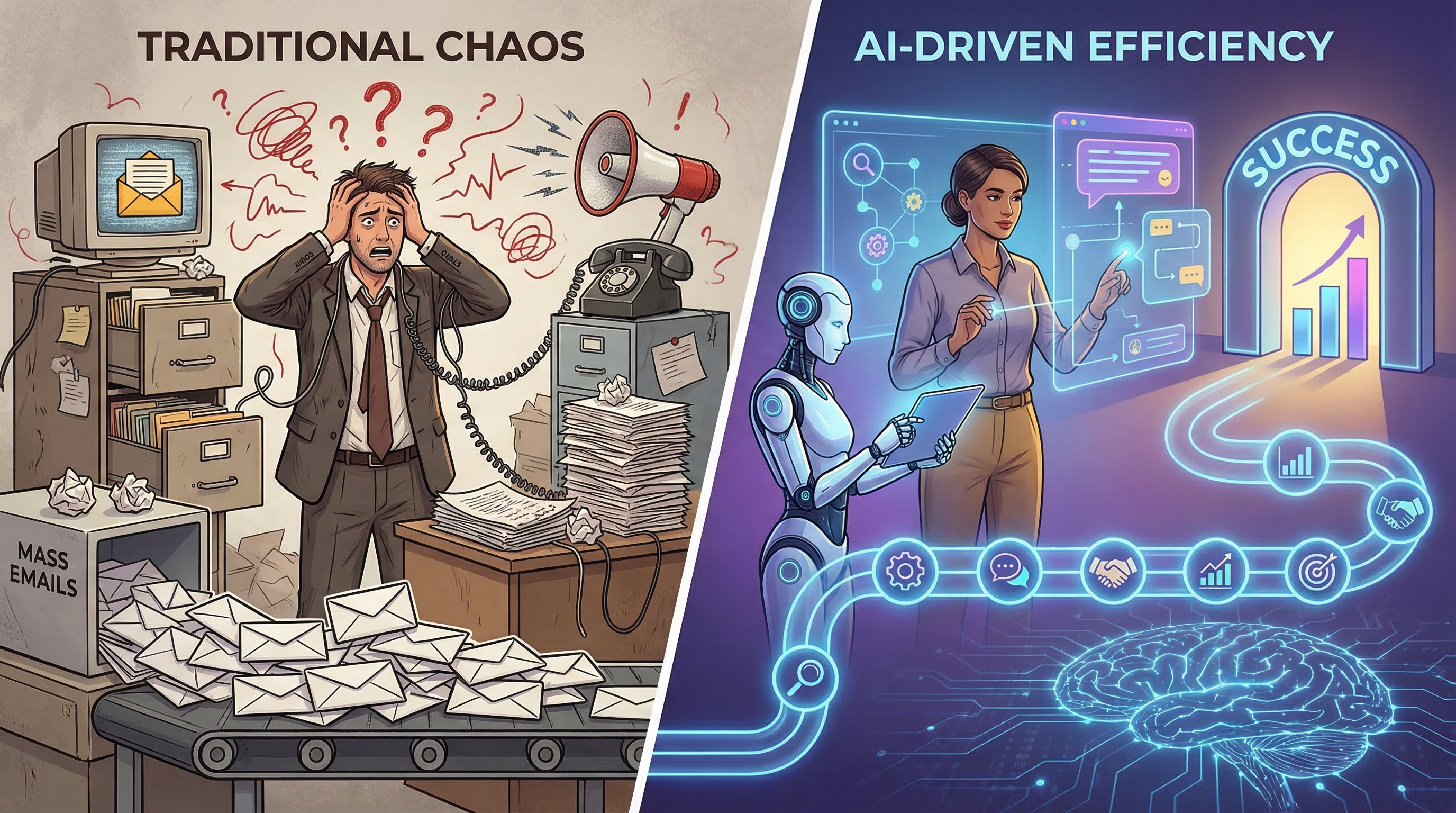
Traditional prospecting, based on cold calls and mass emails, is losing effectiveness. Buyers are more informed and demanding, and ignore generic approaches. AI SDR emerges as a solution to personalize prospecting at scale, identifying leads most likely to convert and delivering relevant messages at the right time. Intelligent automation allows sales teams to focus on building relationships and closing deals.
Step 1: Define Your ICPs with Precision
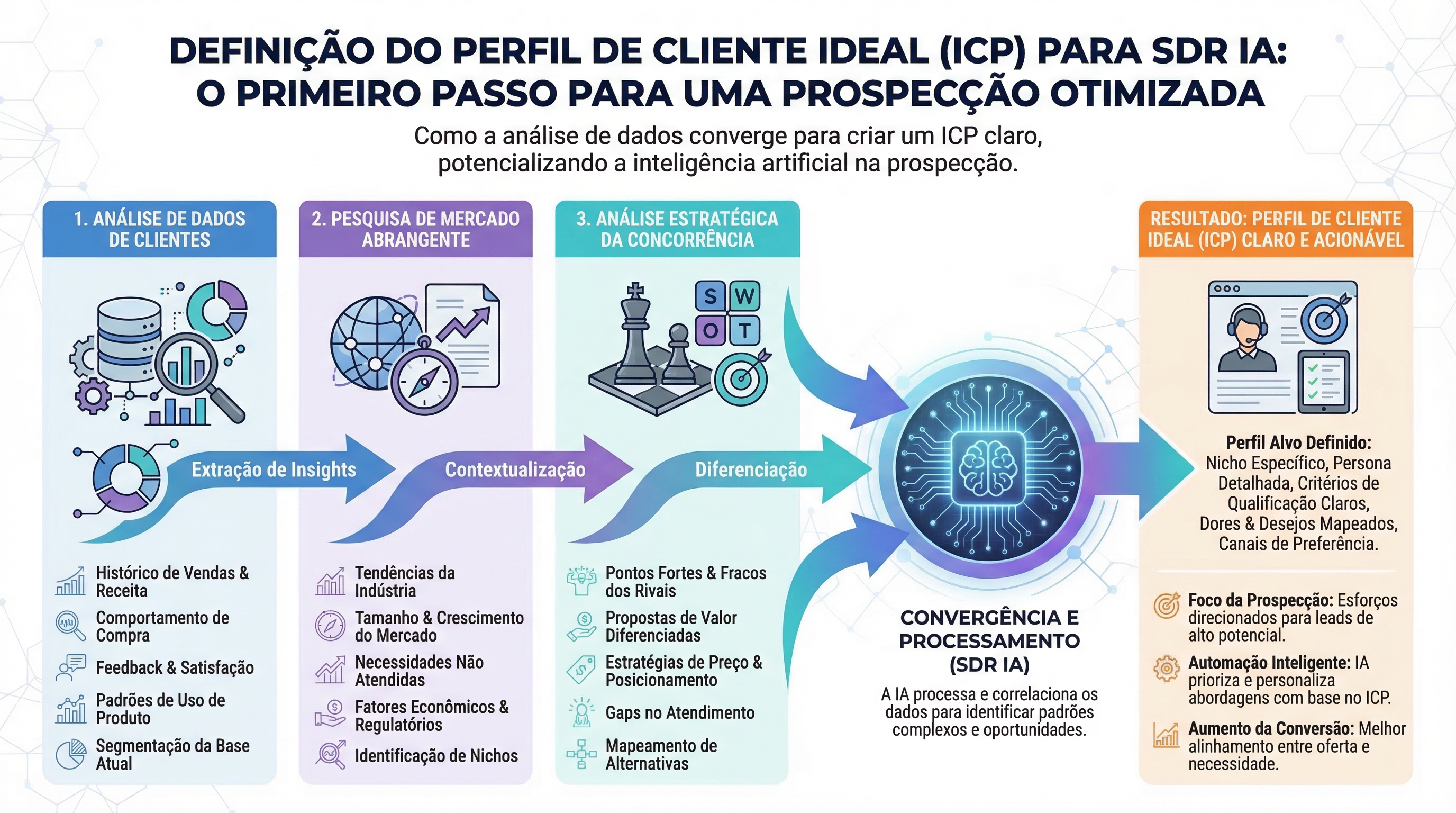
Before implementing any AI tool, it's essential to have clarity about your Ideal Customer Profiles (ICPs). What are the characteristics of companies that achieve the greatest success with your product or service? What are the positions and responsibilities of the people who make purchasing decisions? The more detailed your ICPs are, the more effective the AI SDR's lead segmentation will be. Use data from existing customers, market research, and competitor analysis to refine your profiles.
Step 2: Integrate Your CRM with the AI SDR Tool
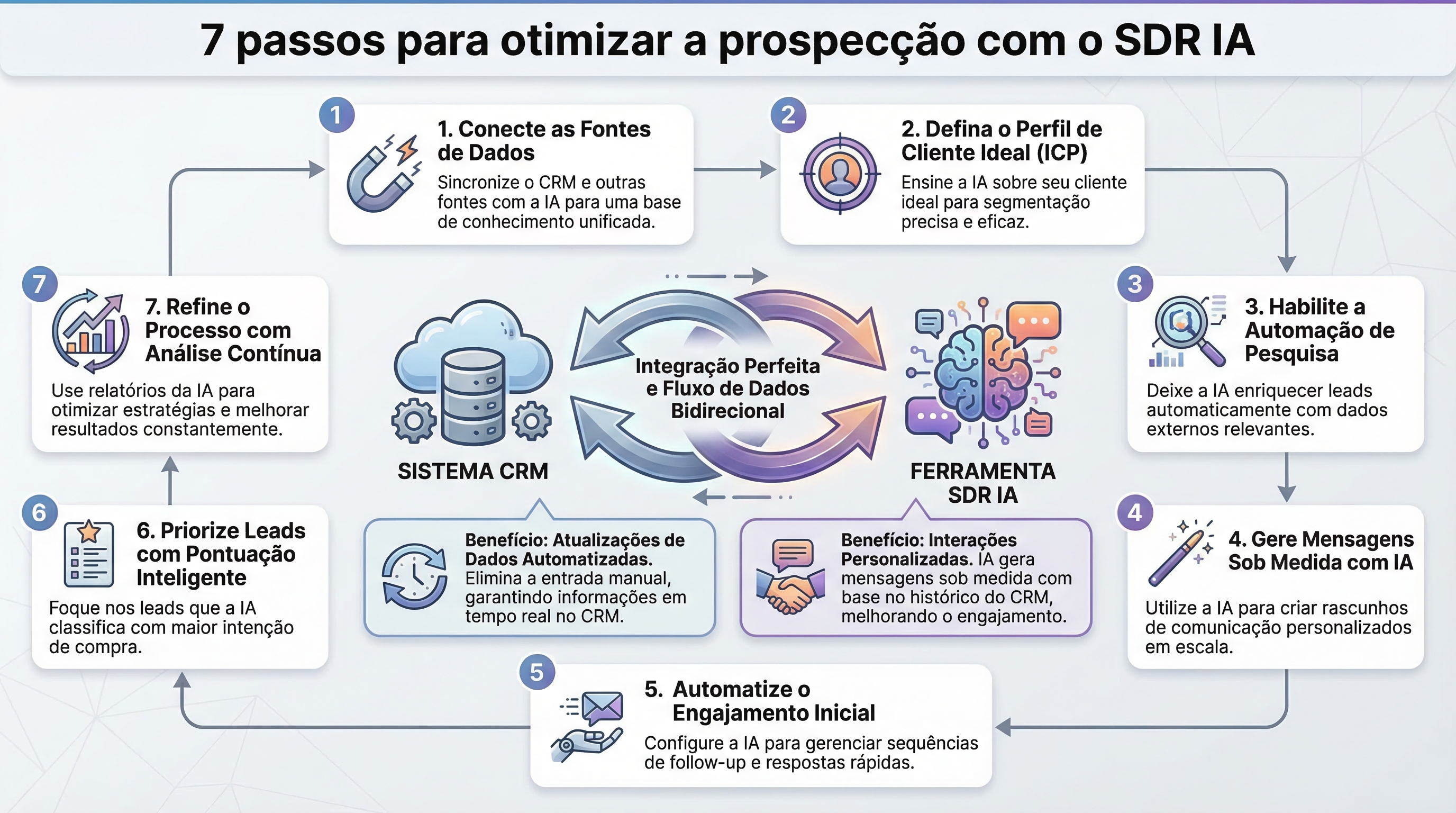
Integration between the CRM and AI SDR is crucial to ensure a continuous workflow and avoid duplication of efforts. By connecting the two platforms, you allow the AI SDR to access relevant data about leads, personalize interactions, and automatically update opportunity status. Toolzz offers native integrations with the major CRMs on the market, facilitating implementation and management.
Curious to see how the integration works in practice? Schedule a Toolzz demo and see how to simplify your workflow.
Step 3: Automate Lead Qualification
AI SDR can automate lead qualification, using pre-defined criteria to identify those most likely to become customers. This includes analyzing demographic, behavioral, and engagement data, as well as verifying contact information and validating data. By focusing on the most qualified leads, SDRs save time and increase their conversion rates.
Step 4: Personalize Communication via WhatsApp
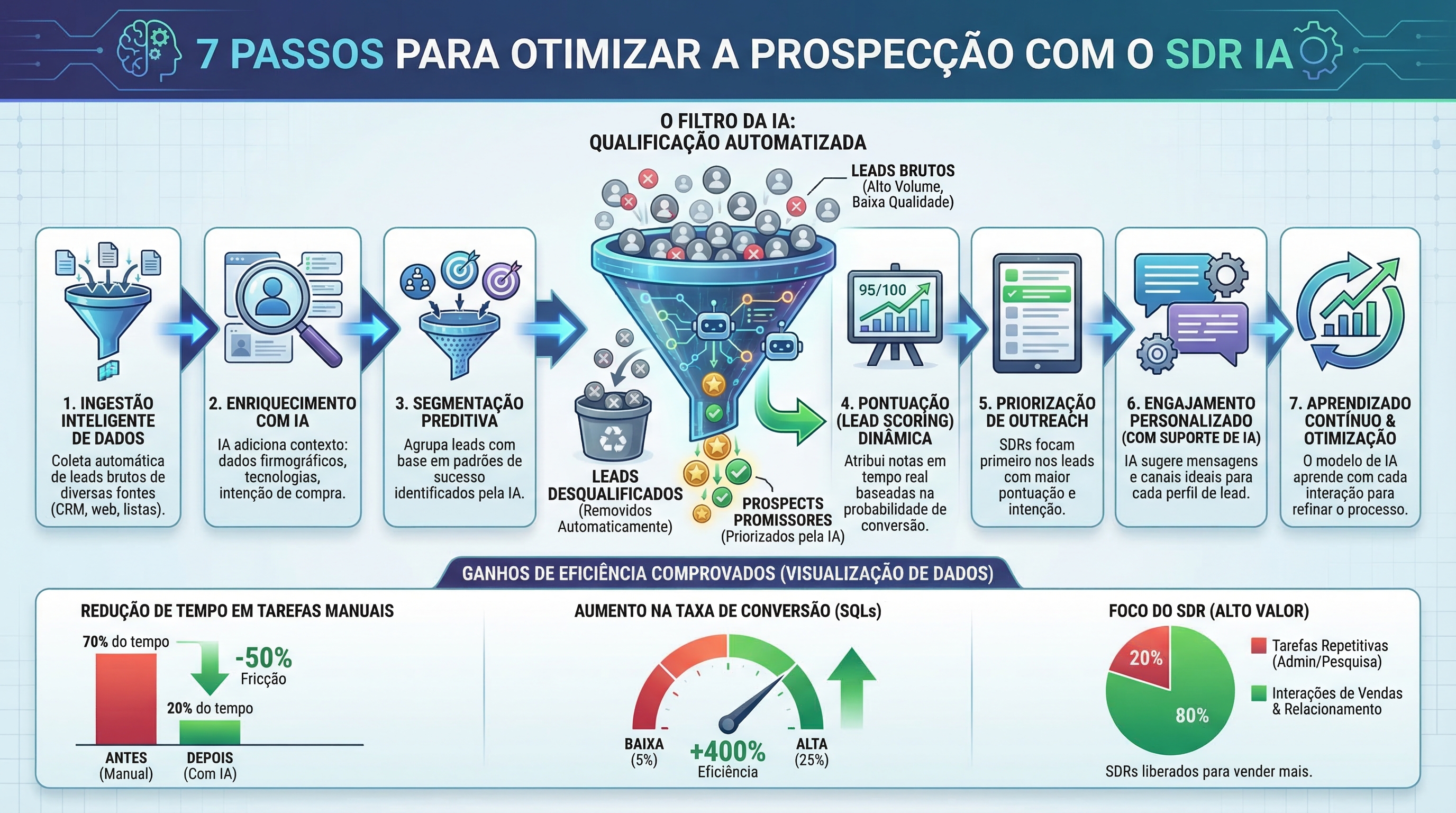
WhatsApp has become an essential communication channel for B2B prospecting. AI SDR can be used to send personalized messages via WhatsApp, based on each lead's interests and needs. This includes sending relevant content, scheduling meetings, and following up with potential leads. Use behavioral triggers to send messages at the right time, maximizing the impact of your communication. If you want to explore this functionality and schedule a demo, click here.
Step 5: Intelligent Meeting Scheduling
Scheduling meetings can be a time-consuming and complex process. AI SDR can automate meeting scheduling, offering leads available time options and synchronizing SDRs' calendars. This eliminates the need for endless email exchanges and ensures meetings are scheduled at the most convenient time for both parties. Toolzz's tool facilitates this process by integrating with major calendar platforms.

Step 6: Monitor and Optimize Performance
It's essential to monitor AI SDR performance and make adjustments as needed. Track metrics such as email open rate, click-through rate, response rate, and meeting scheduling rate. Use this data to identify areas for improvement and optimize your prospecting campaigns. Continuous analysis is essential to ensure the AI SDR is delivering the expected results.
Step 7: Train Your Team to Collaborate with AI
Implementing AI SDR doesn't mean replacing SDRs, but rather empowering the team to work smarter and more efficiently. It's important to train SDRs to understand how AI works, how to interpret the generated data, and how to use the information to personalize interactions with leads. Collaboration between humans and machines is the key to success in modern prospecting.
In conclusion, adopting AI SDR represents a strategic opportunity for companies seeking to optimize prospecting, increase qualified lead generation, and drive sales growth. By following these seven steps, you will be well positioned to reduce friction in prospecting and achieve significant results.























.webp)