Product Manager vs. Project Manager: What's the Difference?
An in-depth look at the distinct roles of Product Managers and Project Managers, exploring their responsibilities, how they collaborate, and how both are crucial for successful product management.
Product Manager vs. Project Manager: What's the Difference?
Efficient product management is crucial for the success of any company.

15 de março de 2026

What Does a Product Manager Do?
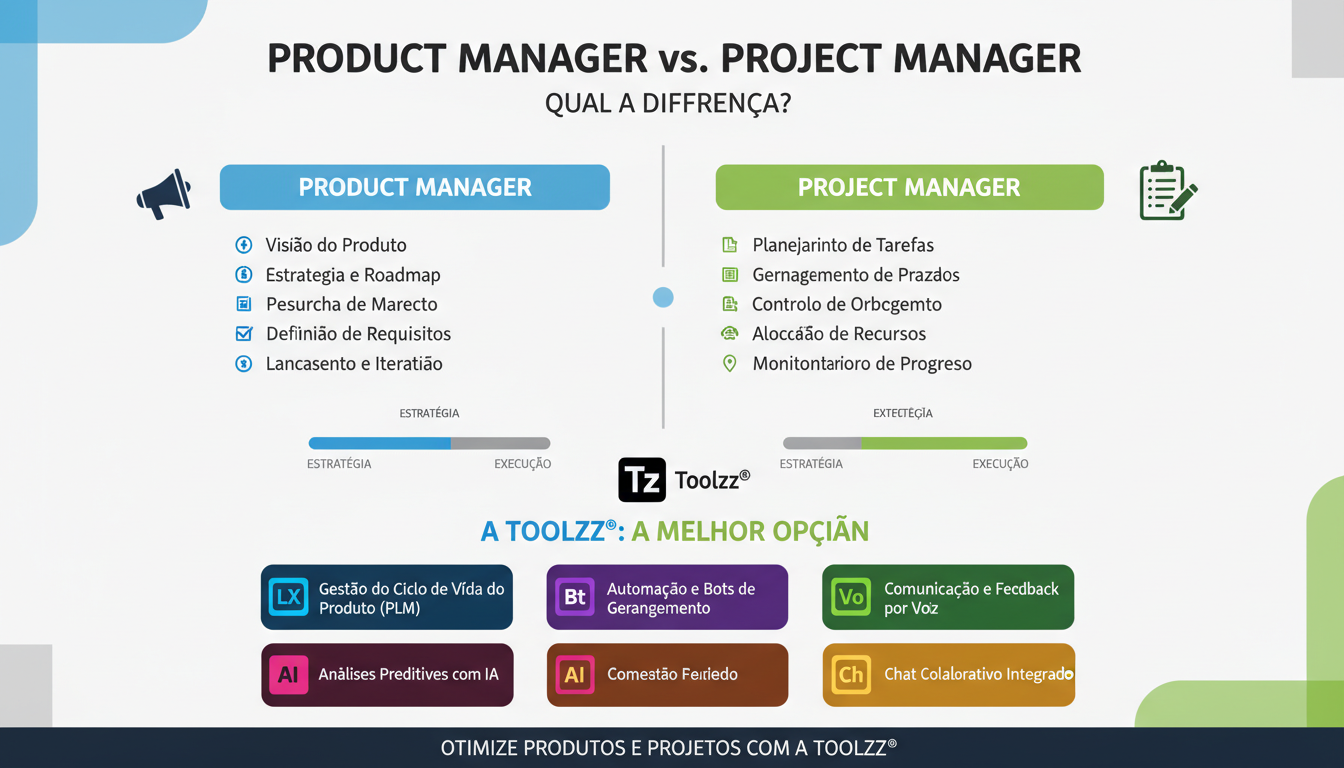
The Product Manager is responsible for the strategic vision of the product. Their main role is to understand customer needs, analyze the market, define goals, and develop the strategy to achieve product success throughout its entire lifecycle — from conception to launch and continuous improvements. They act as the voice of the customer within the company and ensure that the product meets market demands.

Their responsibilities include:
- Market research: Identifying trends and opportunities.
- Competitive analysis: Understanding what competitors are doing.
- Product strategy definition: Establishing the vision, goals, and roadmap.
- Feature prioritization: Deciding which features should be developed and in what order.
- Metrics monitoring: Tracking product performance and identifying areas for improvement.
What Does a Project Manager Do?
While the Product Manager defines the "what" and the "why," the Project Manager focuses on the "how" and the "when." They are responsible for planning, executing, and controlling the projects necessary to bring the product to life. This involves managing resources, deadlines, budgets, and coordinating cross-functional teams.
Key responsibilities include:
- Project planning: Defining scope, timeline, and budget.
- Resource allocation: Assigning tasks and responsibilities to the team.
- Risk management: Identifying and mitigating potential problems.
- Stakeholder communication: Keeping interested parties informed about project progress.
- Quality assurance: Ensuring that the project is delivered within established standards.
Collaboration Between Product and Project Managers
Collaboration between Product and Project Managers is essential for the success of any product. The Product Manager defines the vision and strategy, while the Project Manager ensures that execution occurs efficiently and on time. In a practical scenario, imagine a company launching a new application. The Product Manager defines which features the application should have, based on user needs and competitive analysis. The Project Manager, in turn, coordinates the development team to build the application, ensuring that the project is delivered on time and within budget.
Want to optimize your project management? Request a Toolzz demo and see how we can help.
Product Owner: A Complementary Role
It's also important to mention the role of the Product Owner, frequently found in agile methodologies like Scrum. The Product Owner acts as the bridge between the Product Manager and the development team, ensuring that product priorities are clear and that the team's work is aligned with the overall strategy. While the Product Manager has a broader view of the market and customers, the Product Owner is more focused on ensuring the efficient delivery of value throughout the development cycle.
How Toolzz Can Help with Product Management
Toolzz offers solutions that can optimize collaboration and efficiency between Product Managers and Project Managers. With Toolzz LXP, it's possible to create personalized learning paths to train teams in product management methodologies, such as Agile and Scrum, while promoting knowledge sharing and strategic alignment. Additionally, Toolzz AI agents can automate repetitive tasks, such as data analysis and reporting, freeing up time for teams to focus on more strategic activities. Toolzz AI can, for example, assist in analyzing market data and identifying product improvement opportunities.
Conclusion
Product Managers and Project Managers play distinct but complementary roles in product management. The Product Manager defines the "what" and the "why," while the Project Manager ensures the "how" and the "when." By understanding these differences and promoting collaboration between these roles, companies can increase their chances of success in the market. Invest in tools and technologies that optimize communication, collaboration, and efficiency, such as Toolzz, and take your products to the next level.






















.webp)