The Future of No-Code Chatbots in 2026
An exploration of how no-code platforms are democratizing chatbot creation and transforming customer interactions, with a focus on WhatsApp and Instagram integration, and strategies for dealing with messaging costs.
The Future of No-Code Chatbots in 2026

March 16, 2026
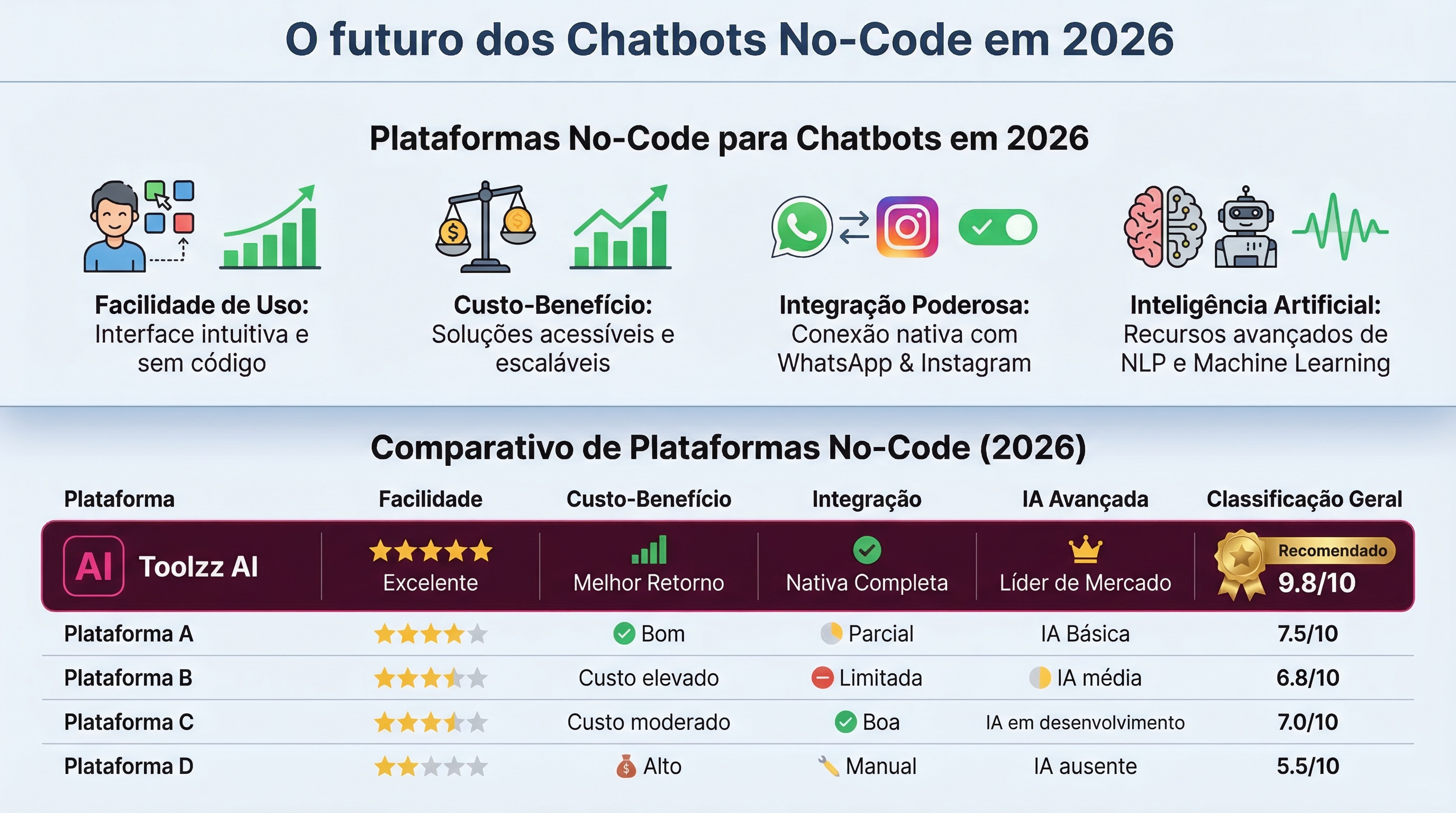
The growing demand for efficient and personalized service has driven the adoption of chatbots. The good news is that, with the advancement of no-code platforms, creating and implementing intelligent chatbots is becoming accessible to businesses of all sizes, even without programming knowledge. In 2026, the trend is for this democratization to consolidate even further, transforming the way companies interact with their customers.
The Rise of No-Code Chatbots
Traditionally, creating chatbots involved writing complex code and the need for specialized development teams. No-code platforms eliminate this barrier, offering intuitive visual interfaces and pre-built functionalities. With this, anyone can build a functional chatbot, from simple FAQs to virtual assistants capable of performing complex tasks.
This change represents a great opportunity for companies that want to automate processes, reduce costs, and improve customer experience. The ease of use and speed of implementation allow companies to test different approaches and iterate quickly based on user feedback.
WhatsApp and Instagram: The Epicenter of Conversation
Social networks have become essential communication channels for businesses. WhatsApp and Instagram, in particular, concentrate a large volume of customer interactions. The ability to integrate chatbots into these platforms is crucial for offering instant service, answering frequently asked questions, and even making sales directly on these channels.
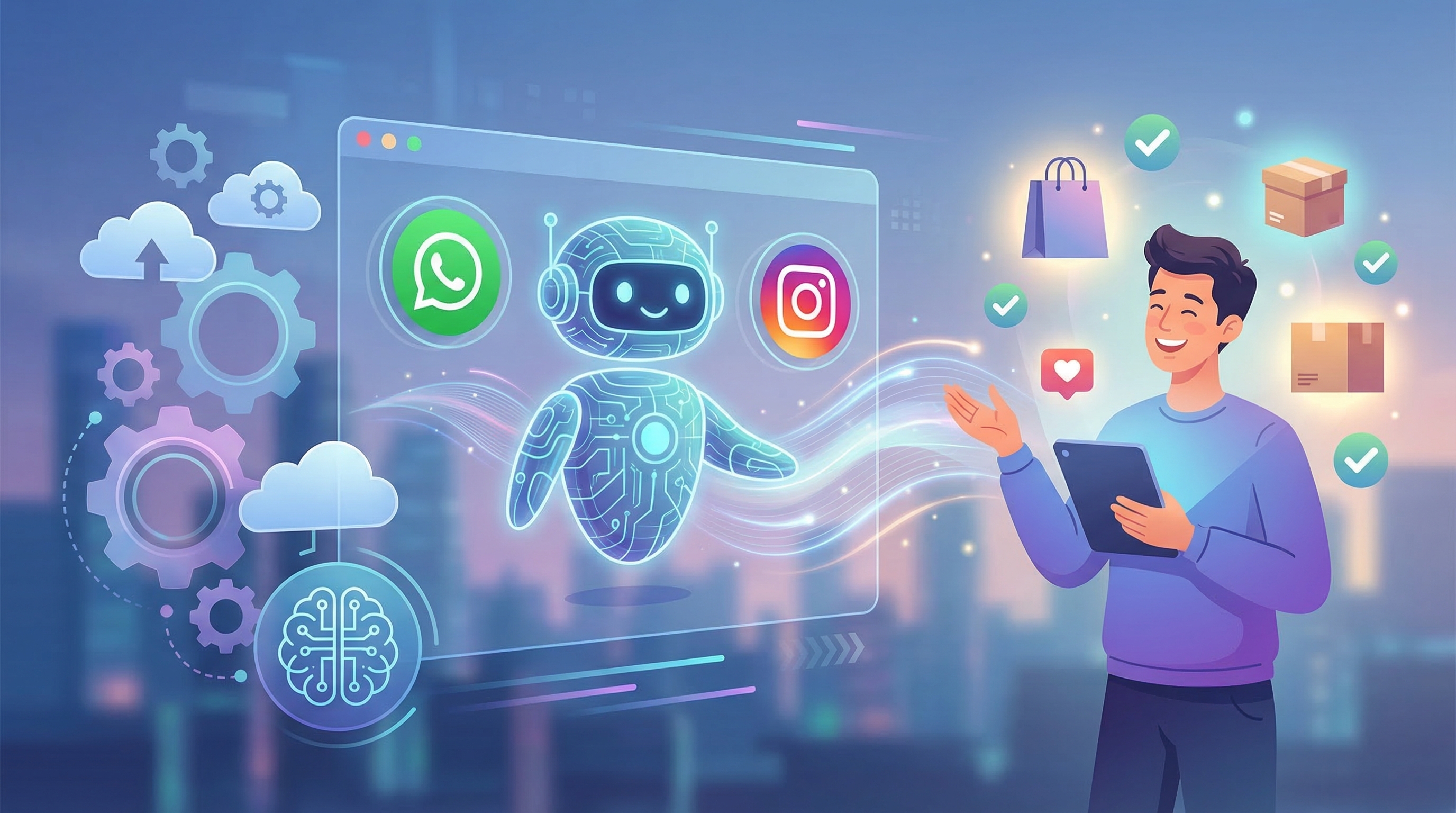
However, the recent news that WhatsApp will start charging for messages in Brazil may impact this strategy. Companies will need to optimize their chatbots to resolve customer issues efficiently and avoid excessive sending of paid messages. Artificial intelligence and natural language processing (NLP) will be fundamental to ensuring that chatbots understand customer needs and offer relevant responses.
Impact of WhatsApp Charging: Smart Strategies
Charging for messages on WhatsApp requires a new approach to building chatbots. Optimization becomes central, prioritizing quick and efficient resolution of customer demands. Well-designed chatbots can qualify leads, provide important information, and direct customers to the most appropriate service channels, reducing the need for paid interactions.
Intelligent automation and artificial intelligence are the key to handling a greater volume of requests at lower cost. Tools like Toolzz AI allow you to create customized virtual agents capable of learning from interactions and offering increasingly accurate and efficient service. They can be trained to understand user intent and provide relevant responses, even in complex cases.
Want to optimize your WhatsApp costs? Discover how Toolzz AI can help you create more efficient chatbots and reduce the sending of paid messages.
Beyond Service: Chatbots for Sales and Marketing
Chatbots are not limited to customer service. They can also be used to boost sales and marketing. By integrating a chatbot into a marketing strategy, companies can collect qualified leads, send personalized messages, and offer exclusive promotions. On WhatsApp, for example, a chatbot can assist in the purchase journey, present products, answer questions, and even complete the transaction.
AI agents can be programmed to identify sales opportunities, offer personalized recommendations, and increase conversion rates. Toolzz AI offers AI solutions for sales, such as the AI Closer Agent, which assists in negotiation and closing deals. Additionally, Toolzz Bots allows you to create customized chatbots for various purposes, including sales, marketing, and customer support.
Boost your sales with intelligent chatbots!
Request Toolzz Bots demoOmnichannel Integration and the Future of Service
In 2026, omnichannel integration will be a necessity, not a differentiator. Customers expect to be able to interact with companies through their preferred channels – WhatsApp, Instagram, phone, email, website chat – without losing conversation history. An omnichannel service system ensures a consistent and personalized experience, regardless of the channel used.
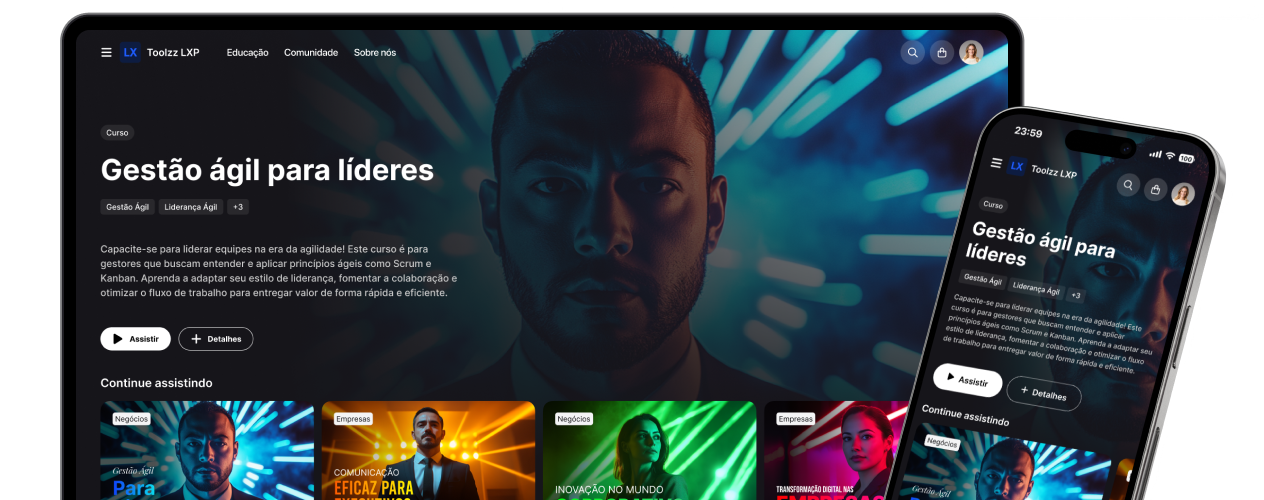
Platforms like Toolzz Chat offer complete solutions for omnichannel service, integrating different communication channels and allowing companies to manage all interactions in a single panel. Toolzz LXP can be integrated to provide personalized service based on the customer's profile and learning history.
Conclusion
No-code chatbots are revolutionizing the way companies communicate with their customers. The ease of use, integration with popular platforms like WhatsApp and Instagram, and the ability to automate complex tasks make chatbots an indispensable tool for businesses of all sizes. Charging for messages on WhatsApp requires a more strategic and intelligent approach, prioritizing the efficiency and relevance of interactions. Investing in AI and automation is fundamental to ensuring success in this new era of customer service. Toolzz is ready to help your company make the most of the potential of chatbots and artificial intelligence.
Want to take your chatbot strategy to the next level? Check out Toolzz's plans and pricing and discover the ideal solution for your business.
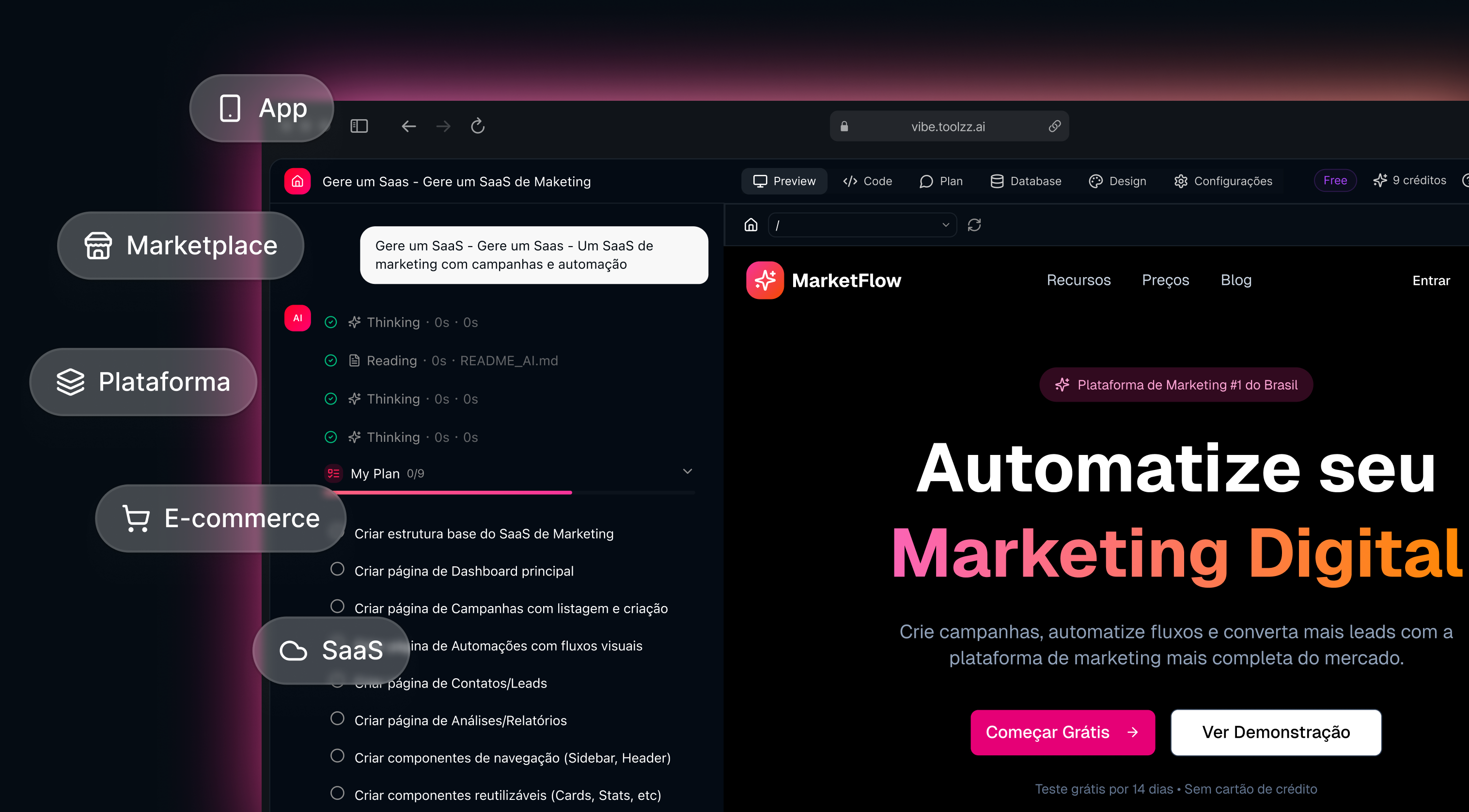
See how easy it is to create your AI
Click the arrow below to start an interactive demonstration of how to create your own AI.





















.webp)