Lemmatization vs Stemming: Which Technique to Use in NLP?
A comprehensive guide comparing lemmatization and stemming techniques in Natural Language Processing, exploring their differences, applications, and how to choose the right approach for your business needs.
Lemmatization vs Stemming: Which Technique to Use in NLP?

March 16, 2026
Natural Language Processing (NLP) is the key to enabling computers to understand and respond to human language in a meaningful way. For this to happen, it's necessary to simplify how words are structured. Two fundamental techniques in this process are lemmatization and stemming, essential tools for any project involving text analysis.
What is Natural Language Processing (NLP)?
NLP combines computer science, artificial intelligence, and linguistics to build systems capable of understanding and interacting with human language. In a world where communication is increasingly mediated by machines, this field becomes crucial for various applications, from chatbots and virtual assistants to sentiment analysis and machine translation.
Stemming: The Simplified Approach
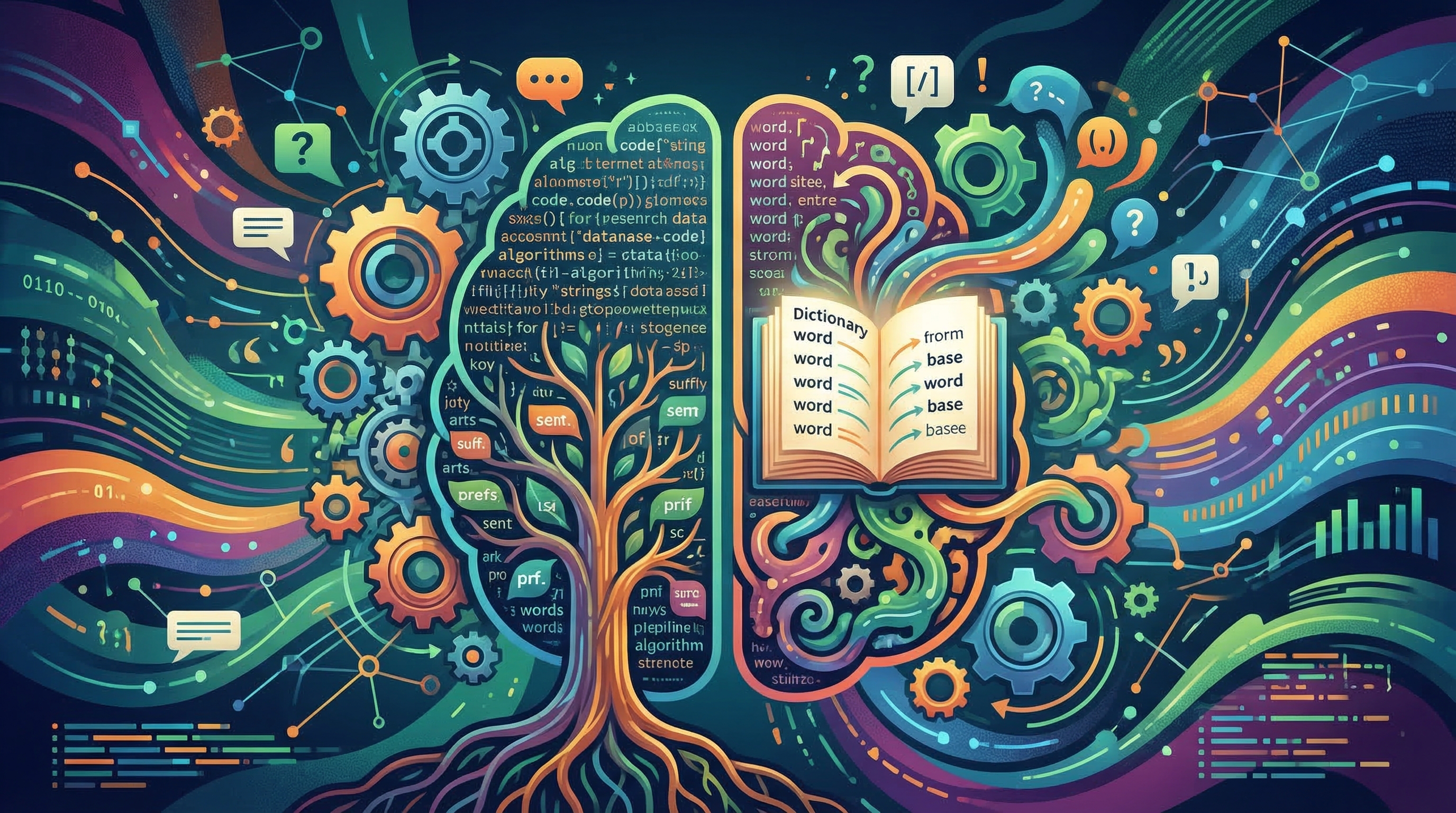
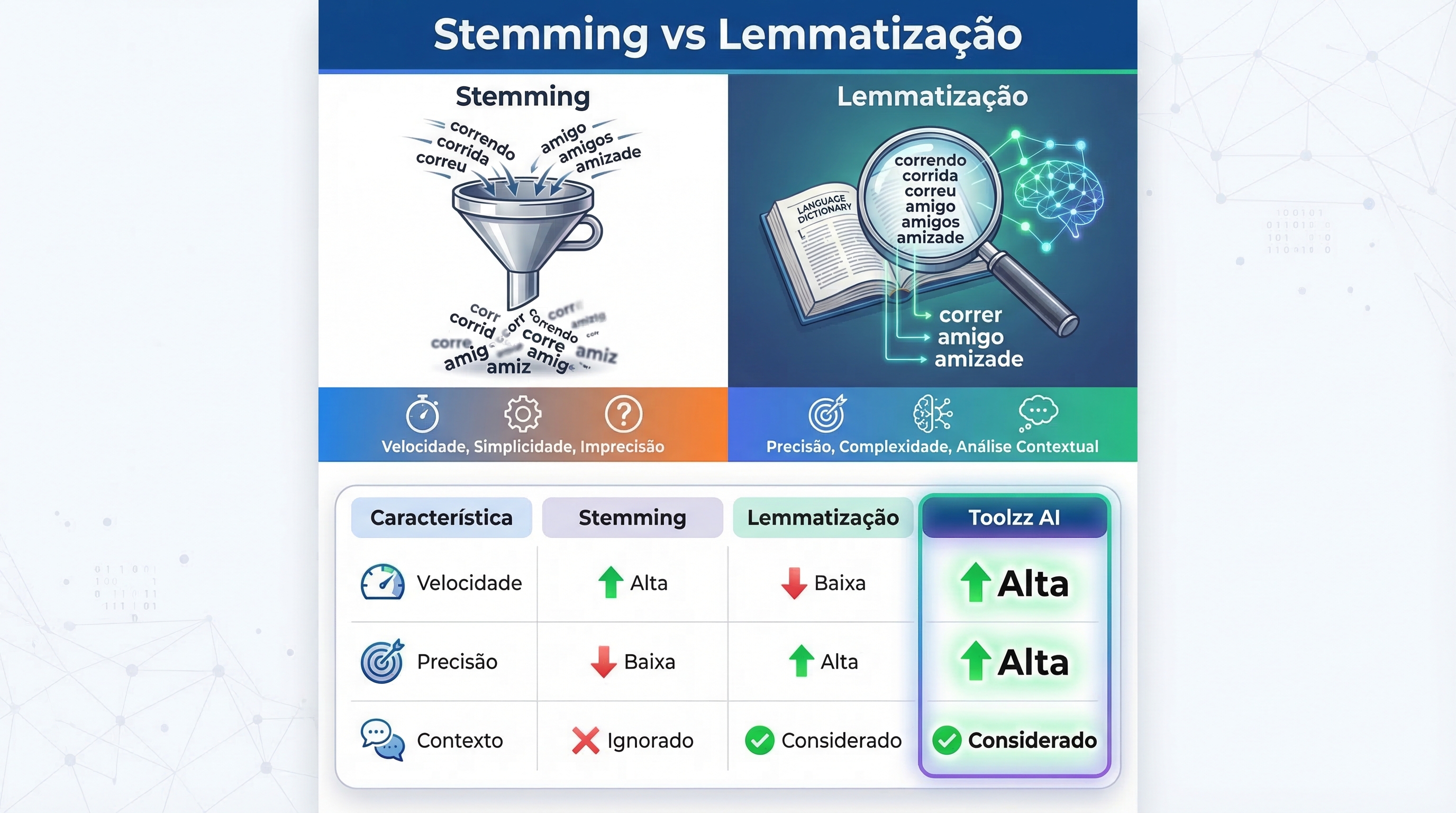
Stemming is a fast and efficient technique that reduces words to their root by removing suffixes, such as "ed" or "ing". Although simple to implement, it can be imprecise, resulting in roots that are not real words. For example, the words "requirement" and "requires" can be reduced to "requir". Despite its limitations, stemming is ideal for applications that require speed and handle large volumes of text, where precision is not the most critical factor.
Lemmatization: The Contextual Analysis
Lemmatization, on the other hand, adopts a smarter approach. It considers the word's context, grammatical class, and meaning to convert it to its base form, or lemma, using a dictionary. Unlike stemming, lemmatization always produces a valid word. For example, the word "saw" can remain as "saw" (noun) or be transformed into "see" (verb) depending on the context. Although it takes longer and requires more computational resources, lemmatization offers greater precision and clarity in analysis.
When to Use Stemming and When to Use Lemmatization?
The choice between stemming and lemmatization depends on the specific needs of your project. If speed is a priority and you're working with large volumes of text, stemming may be the best option. However, if precision and understanding of meaning are crucial, such as in sentiment analysis or machine translation, lemmatization is the most appropriate choice. Toolzz AI offers custom agents that can be configured to use the most suitable NLP technique for each task, ensuring maximum efficiency and precision.
Practical Applications in Business
Stemming and lemmatization techniques are widely used in various business applications. In customer service, for example, they can be applied in chatbots to better understand user questions and provide more relevant answers. In data analysis, they can be used to identify trends and patterns in large text datasets, such as customer reviews or social media posts. With Toolzz Bots, you can create intelligent chatbots that use these techniques to improve customer experience and optimize business processes.
Want to optimize communication with your customers? Request a Toolzz Bots demo and see how AI can transform your customer service.
Enhancing Corporate Education with NLP
In corporate education, NLP plays a fundamental role in personalizing learning. By analyzing training material content and student interactions, it's possible to identify knowledge gaps and adapt content to meet individual needs. Toolzz LXP uses NLP techniques to recommend relevant content, optimize the learning journey, and increase employee engagement.

To further optimize the learning experience, Toolzz offers Blog AI Agents that can generate relevant and personalized content for your employees.
Conclusion
In summary, both lemmatization and stemming are valuable techniques for natural language processing. The choice between them depends on the specific requirements of your project, but understanding their differences is essential to achieve the best results. By integrating these techniques into your business strategies, you can improve communication with your customers, optimize processes, and drive growth. With Toolzz solutions, you have access to the tools and expertise needed to implement NLP effectively and transform your data into valuable insights.
Ready to transform your data into valuable insights with NLP?
Request Toolzz AI DemoDemo Bots
Explore the interactive demo of Toolzz Bots, a powerful no-code platform that enables the creation of chatbots that operate 24 hours a day, 7 days a week.
























.webp)