Payment Gateways: Which is the Cheapest for Your E-commerce in 2026?
A comprehensive guide to choosing the most cost-effective payment gateway for your e-commerce in 2026, analyzing total cost of ownership, hidden fees, and intelligent payment orchestration strategies.
Payment Gateways: Which is the Cheapest for Your E-commerce in 2026?

March 16, 2026
Choosing a payment gateway for your e-commerce is a crucial decision, directly impacting your costs and customer experience. In 2026, with the constant evolution of the market, analyzing the total cost of ownership (TCO) becomes even more important than just the percentage rate per transaction.
Hidden Costs of Payment Gateways
When evaluating payment gateways, it's essential to consider costs that go beyond transaction fees. Time spent on integration, fixed monthly fees (which, fortunately, are becoming obsolete), withdrawal fees that affect your cash flow, and extra work with webhooks and retries in instability scenarios are determining factors.
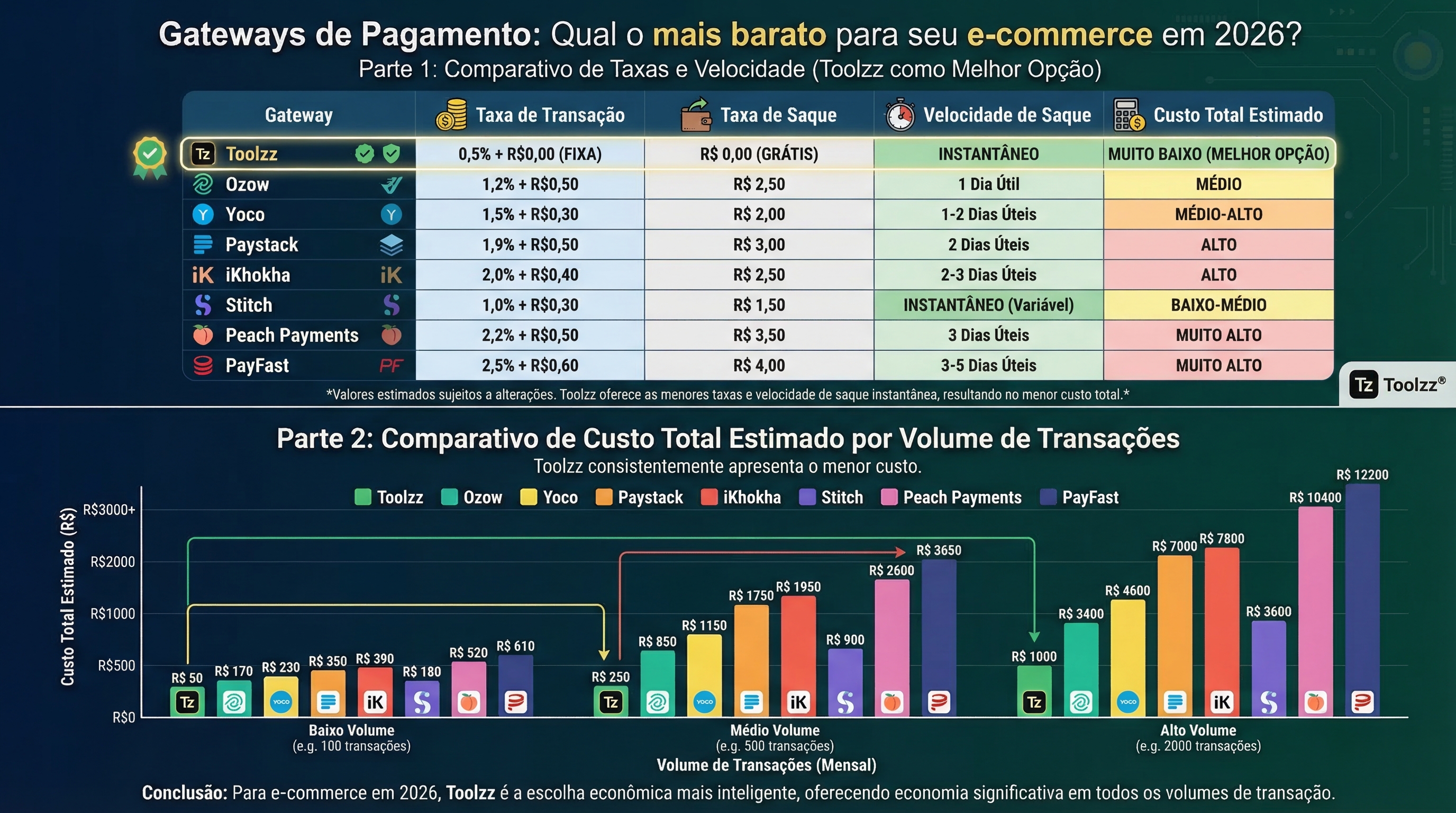
Payment Gateway Ranking by Total Cost (2026)
To help with your choice, we've compiled a ranking of the most economical payment gateways in 2026, considering TCO:
- Ozow: Ideal for those just starting, offering free service for the first R$1 million in sales.
- Yoco: No monthly fees and rates that automatically decrease as sales volume increases.
- Paystack: Advantageous for higher value purchases.
- iKhokha: Offers good control with a 2.85% fee.
- Stitch: Prepared for the future of Open Banking.
- Peach Payments: Perfect for monthly subscription models.
- PayFast: Still functional, but withdrawal fees can be problematic.
The Simple Math That Matters
Calculating the total cost per transaction is fundamental. The formula is:
Total cost = (percentage fee × transaction amount) + fixed fee + withdrawal fee
For example, for a R$100 purchase:
- Yoco (2.95%): R$2.95
- Paystack (2.9% + R$1): R$3.90
For a R$5,000 purchase:
- Yoco: R$147.50
- Paystack: R$146.00
In this case, Paystack becomes more advantageous for purchases above R$2,000.
Withdrawal Fees and Cash Flow Impact
Withdrawal fees can significantly impact cash flow, especially during times of instability. The speed at which money reaches your account makes all the difference:
| Gateway | Withdrawal Fee | Speed | Impact |
|---|---|---|---|
| Peach | Free | Next business day | None |
| Stitch | R$2 – R$10 | Immediate | Low |
| Yoco | R$2.50 | 1–2 days | Medium |
| Paystack | R$3 | Next day | Medium |
| Ozow | R$5 | Immediate | Medium |
| PayFast | R$8.70 | 2–3 days | High |
Intelligent Payment Orchestration
An interesting strategy is to build a Payment Orchestrator. This is an API that automatically chooses the cheapest gateway based on the payment type and purchase amount. This solution can generate significant savings.
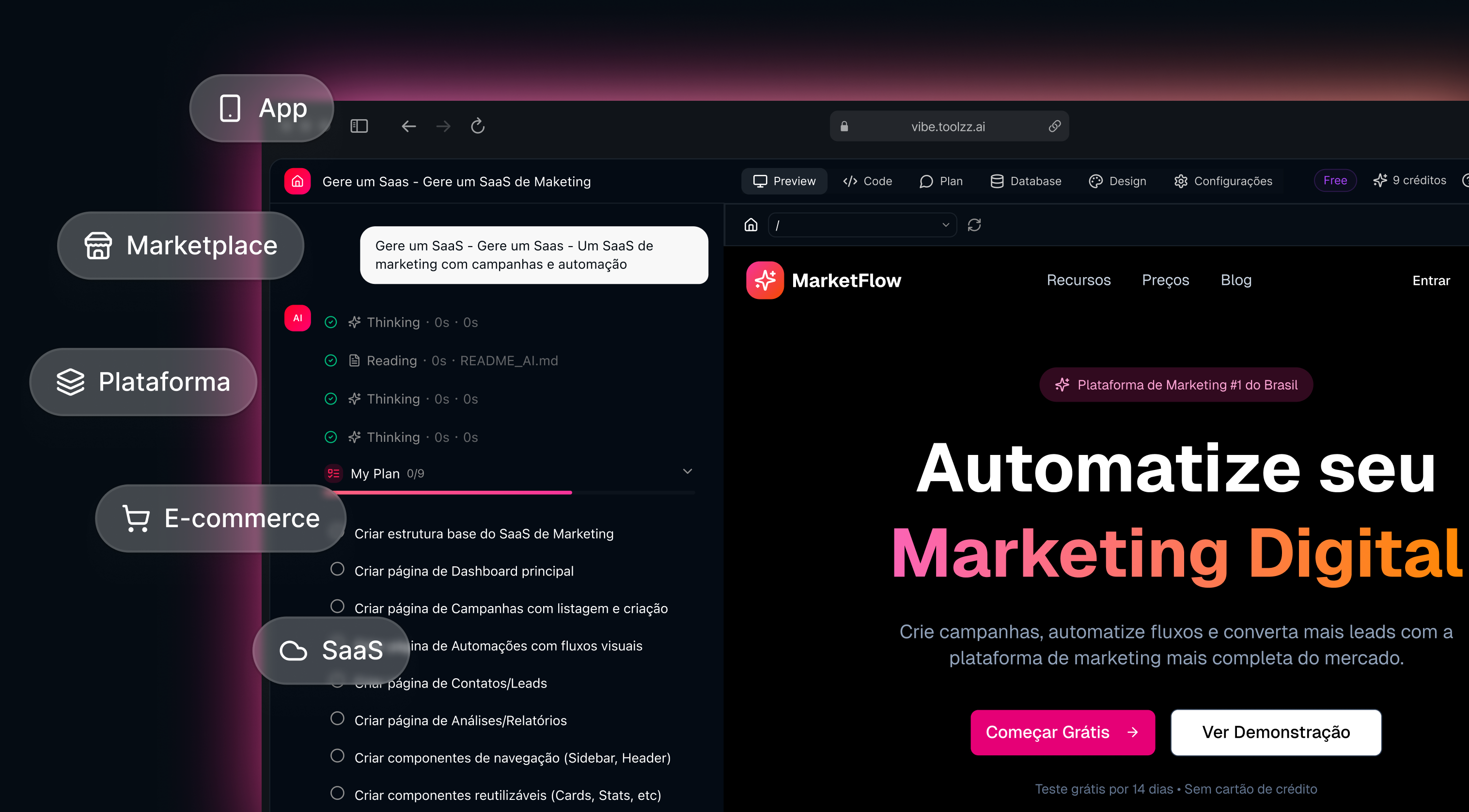
Looking for ways to optimize your costs?
Check out Toolzz plansThe code for this orchestration could be something like:
javascript // app/api/orchestrate-payment/route.ts import { NextResponse } from 'next/server';
const rules = { eft: { name: 'ozow', fee: 0, url: 'https://api.ozow.com/v2/payment' }, // free first year! cardLow: { name: 'yoco', fee: 2.95 }, cardHigh:{ name: 'paystack',fee: 2.9 } // anything over R2,000 };
export async function POST(req: Request) { const { amount, method, orderId } = await req.json();
const chosen = (amount > 2000 && method === 'card') ? rules.cardHigh : rules[method] || rules.cardLow;
// Call the chosen gateway here... const res = await fetch(chosen.url, { /* your headers & body */ });
// Log to Supabase for Grafana monitoring during load shedding await logPayment({ gateway: chosen.name, amount, orderId });
return NextResponse.json({ redirectUrl: data.url, gatewayUsed: chosen.name }); }
With this API, the gateway choice is made intelligently, optimizing costs and ensuring the best experience for the customer.
Choosing the Ideal Gateway for Your Business
Choosing the ideal payment gateway depends on your business characteristics:
- Beginners: Ozow (no fees for EFT and instant bank transfers).
- Low-value retail: Yoco (decreasing fees as sales volume increases).
- High value or rapid growth: Paystack (user-friendly interface and detailed information about payment failures).
- Full checkout control: iKhokha (enhanced security with HMAC-SHA256 signatures).
- SaaS or subscriptions: Peach Payments (tokenization for recurring charges).
- Future-focused (PayShap and Open Banking): Stitch (white-labeling and direct bank connections).
Automate your financial management! Discover how Toolzz's AI Blog Agent can optimize your processes and reduce costs.

Maximizing Resilience in Online Payments
To ensure the resilience of your payment system, follow these tips:
- Never trust the "success URL" redirect. Use webhooks and idempotency keys.
- Queue failed webhooks using Supabase Edge Functions.
- Monitor success rates by bank (FNB, Capitec, etc.) and alert on Slack when failures exceed 5%.
Conclusion
Choosing the cheapest payment gateway for your e-commerce in 2026 requires careful analysis of total cost of ownership and your business's specific needs. Evaluate transaction fees, withdrawal fees, processing speed, and ease of integration. Consider implementing a payment orchestrator to further optimize your costs and ensure the best experience for your customers. Platforms like Toolzz AI can assist in process automation and data analysis for more efficient decision-making. With Toolzz's AI agents, you can optimize your e-commerce financial management, automate tasks, and reduce operational costs.
Want to know how AI can revolutionize your e-commerce? Schedule a Toolzz demo and discover the power of intelligent automation.
See how easy it is to create your AI
Click the arrow below to start an interactive demonstration of how to create your own AI.





















.webp)