Calculating and Interpreting CSAT: Complete Guide for Your Company
A comprehensive guide on how to calculate, interpret, and use Customer Satisfaction Score (CSAT) to improve customer experience and drive business results through effective measurement and automation.


March 15, 2026
Calculating and Interpreting CSAT: Complete Guide for Your Company
Customer satisfaction is the engine of success for any business. But how do you measure this satisfaction accurately and transform it into concrete actions? The Customer Satisfaction Score (CSAT) is a fundamental metric to answer this question, providing a clear overview of how satisfied your customers are with your products and services. This comprehensive guide will show you how to calculate, interpret, and use CSAT to improve customer experience and boost your company's results.
What is a CSAT Calculator?
A CSAT calculator is a tool that automates the process of calculating your Customer Satisfaction Score. Instead of manually counting positive responses from your surveys, the CSAT calculator processes the data and instantly provides the percentage of satisfied customers. This saves time and ensures accuracy of results, allowing your team to focus on continuous improvement strategies.
Understanding the Customer Satisfaction Score (CSAT)
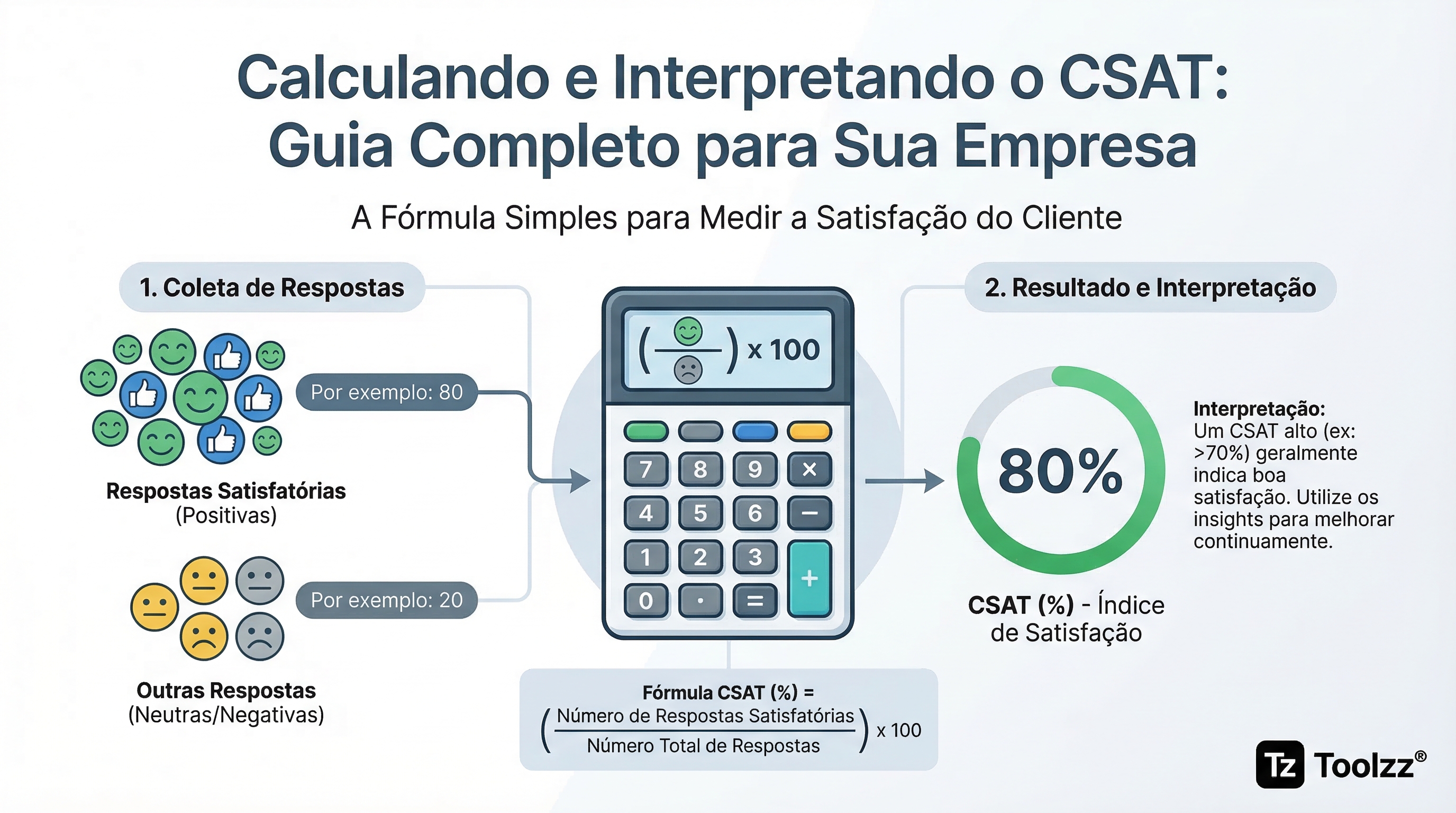
CSAT measures the degree of customer satisfaction with a specific interaction with your company. Generally, it is collected through a simple question like: "On a scale of 1 to 5, how satisfied were you with the service received?" Only responses that indicate satisfaction (usually 4 or 5) are considered in the CSAT calculation. Unlike the Net Promoter Score (NPS), which evaluates loyalty, or the Customer Effort Score (CES), which measures ease of problem resolution, CSAT focuses on immediate satisfaction after contact.
How is CSAT Calculated?
The formula for calculating CSAT is quite simple:
CSAT (%) = (Number of Satisfactory Responses ÷ Total Number of Responses) × 100
For example, if you received 200 responses from a survey and 160 of them indicated satisfaction, your CSAT would be (160/200) × 100 = 80%. To optimize this process, use tools that automate the calculation and report generation – like the features of Toolzz LXP, which allows you to integrate satisfaction surveys directly into learning paths and track results in real time.
Want to know how Toolzz LXP can help you measure CSAT efficiently? Request a demo and see it in practice!
How to Use a CSAT Calculator Effectively
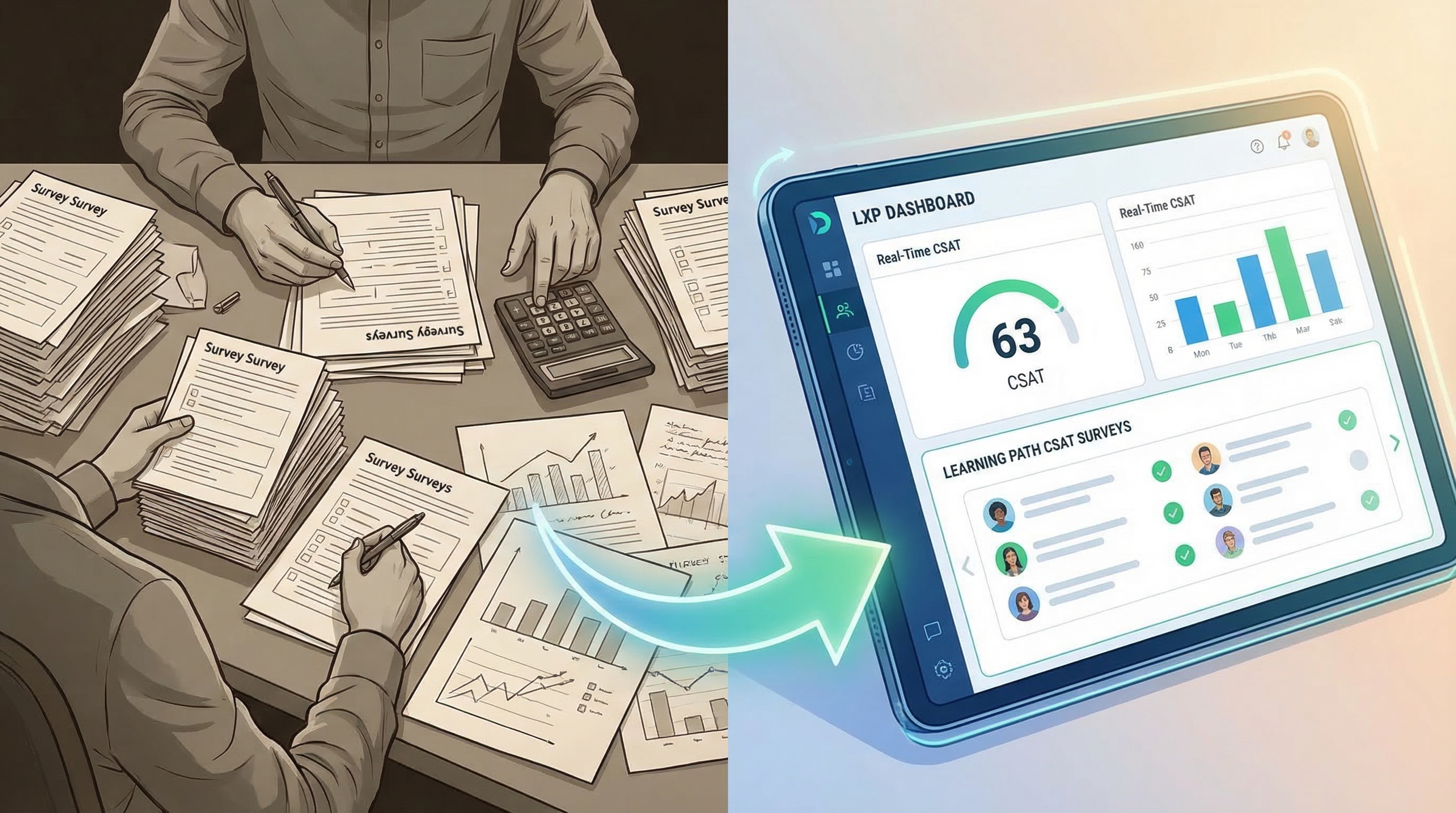
To get maximum value from your CSAT calculator, follow these tips:
- Clean Data: Use only complete and valid responses to avoid distortions.
- Consistent Scale: Define a clear satisfaction scale (for example, 1 to 5) and maintain consistency across all surveys.
- Regular Monitoring: Calculate CSAT regularly (weekly or monthly) to identify trends and areas for improvement.
- Segmentation: Analyze CSAT by different segments (for example, by product, service channel, or agent) to identify specific patterns.
Designing Effective CSAT Surveys
The success of your CSAT depends on the quality of your surveys. Follow these best practices:
- Be Concise: Keep the survey short and direct, with only one main question.
- Clear Language: Use simple and easy-to-understand language.
- Right Timing: Send the survey right after customer interaction to ensure accuracy of responses.
- Avoid Bias: Formulate the question neutrally to avoid influencing customer response.
Interpreting Your CSAT Score
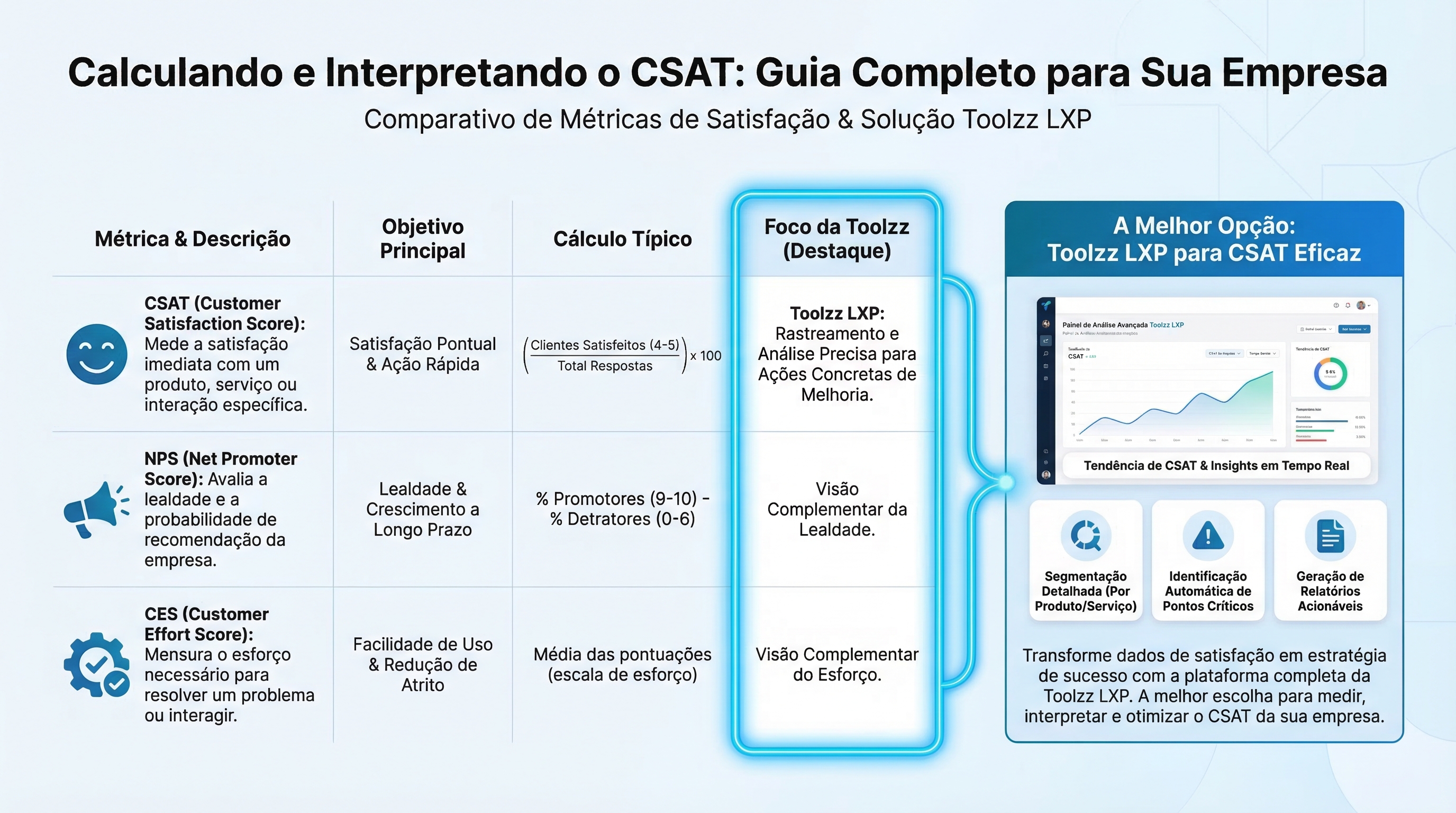
A CSAT score above 85% indicates a high level of customer satisfaction. A score between 75% and 85% is considered good, but there is still room for improvement. A score below 75% indicates you need to take action to improve customer experience. It's important to compare your score with your industry benchmarks to get a more accurate perspective of your performance.
Using CSAT Data to Improve Customer Satisfaction
CSAT is not just a number; it's a powerful tool to drive continuous improvement. Use CSAT data to:
- Identify Weak Points: Discover areas where your customers are dissatisfied and take corrective actions.
- Recognize Good Performance: Identify agents or teams that are delivering excellent service and share their success practices.
- Personalize the Experience: Use CSAT insights to personalize customer experience and offer more relevant solutions.
- Automate Actions: Integrate CSAT with automation tools to trigger specific actions based on customer score, such as sending personalized messages or opening a priority support ticket. Toolzz AI offers the ability to create custom agents that can analyze CSAT responses and make decisions in real time, optimizing service and customer satisfaction.
Advanced CSAT Tracking and Automation Tools
Modern customer service platforms offer advanced features to track and automate CSAT. These tools allow:
- Real-Time Dashboards: View CSAT in real time and track trends over time.
- Custom Alerts: Receive alerts when CSAT falls below a certain threshold.
- Integrations: Integrate CSAT with your CRM systems and other business tools.
- Sentiment Analysis: Use sentiment analysis to identify patterns and insights in customer responses.
Leveraging integrations, you can use a Toolzz Support AI Agent [https://toolzz.com.br/agente/agente-de-suporte] to analyze your customers' sentiment.
Conclusion
CSAT is an essential metric for any company that wants to build lasting relationships with its customers. By calculating, interpreting, and using CSAT data effectively, you can identify areas for improvement, personalize customer experience, and drive business growth. Invest in tools and strategies that allow you to monitor CSAT continuously and transform customer satisfaction into a competitive advantage. Toolzz, with its AI and automation solutions, can be your ideal partner on this journey, helping you create exceptional experiences and retain your customers.
Want to know more about how Toolzz can help you optimize your customer satisfaction? Contact us and schedule a demo!
























.webp)