AI Observability: Ensuring the Reliability of Your Systems
A comprehensive guide exploring the importance of AI observability in monitoring, understanding, and ensuring consistent performance of intelligent systems, including the five fundamental pillars and real-world examples of AI model degradation.

AI Observability: Ensuring the Reliability of Your Systems

March 17, 2026
Artificial intelligence (AI) is transforming businesses, but trust in its results is fundamental. With the increase in AI incidents and failures, observability emerges as a crucial solution to monitor, understand, and ensure consistent performance of intelligent systems. This guide explores the pillars of AI observability and how it can protect your investments.
The Trust Problem in AI
A 2025 report indicates that 95% of companies don't see returns on their investments in AI projects. AI-related failures and incidents undermine consumer trust and prevent widespread adoption. Imagine an equipment failure prediction model that, after six months, loses accuracy, generating losses and interruptions. Or, even worse, a healthcare system with inaccurate diagnoses, putting lives at risk. These scenarios, unfortunately, are real and demonstrate the importance of continuously monitoring AI health and performance.
What is AI Observability?
AI observability is the ability to monitor, understand, and explain the behavior of AI systems. Unlike traditional software observability, which focuses on metrics, logs, and traces, AI observability expands this scope to include data quality, drift detection, and model interpretability. In summary, it's like having a complete control panel for your AI, allowing you to identify and correct problems before they cause negative impacts.
The Three Forms of Model Degradation
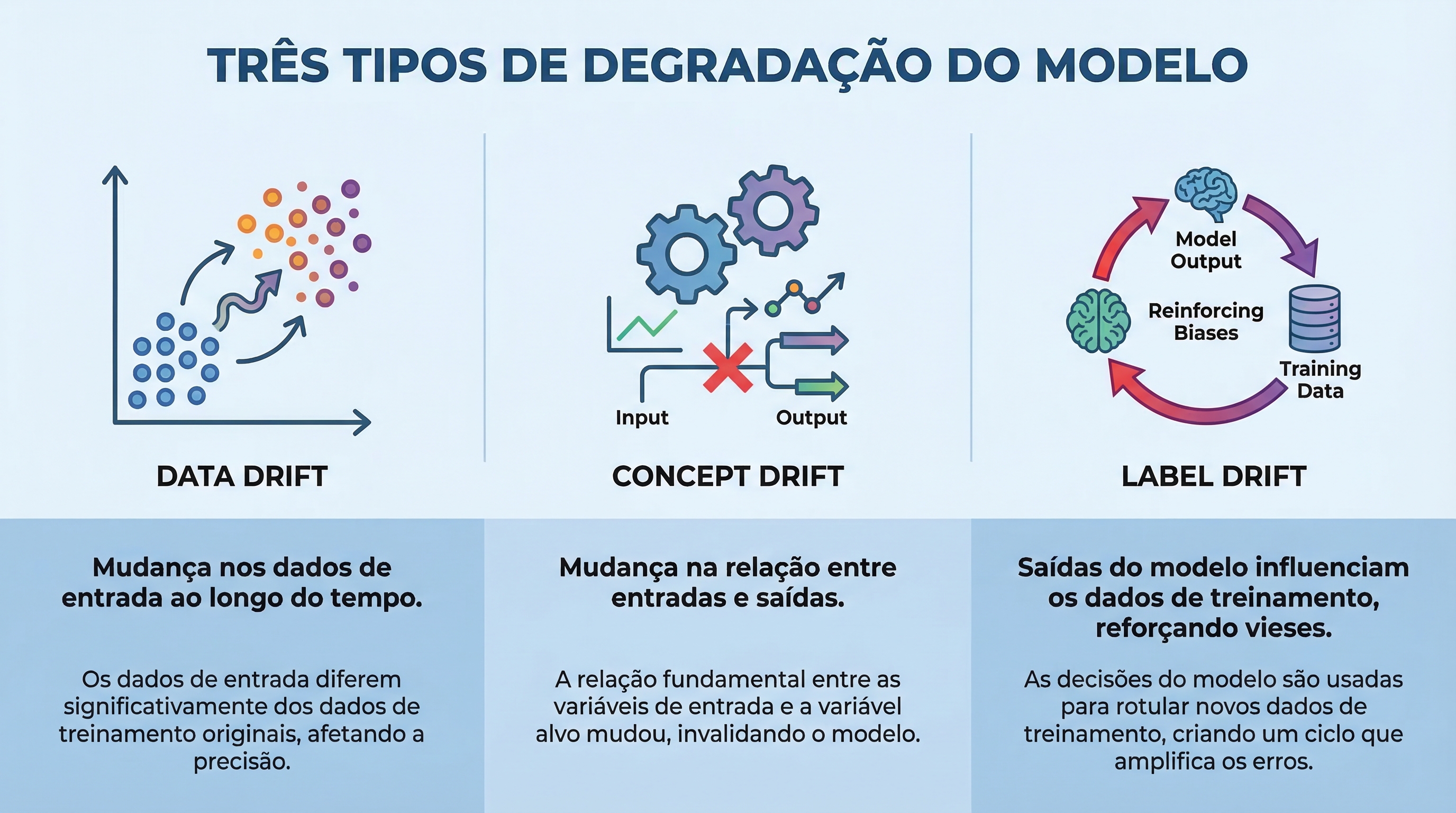
AI models are not static; they degrade over time due to various factors. Three main types of degradation are:
Data Drift: Occurs when the distribution of input data deviates from the original training data. A fraud detection model trained with pre-pandemic data may become ineffective with changes in consumer habits.
Concept Drift: The relationship between model inputs and outputs changes over time. A credit scoring model may lose its accuracy as economic conditions change.
Label Drift: When model results influence subsequent training data, creating a feedback loop that reinforces biases and inaccuracies.
These forms of degradation don't always generate traditional errors, such as exceptions or slowness, making observability even more crucial.
Want to ensure the performance and reliability of your AI models?
Request a Toolzz AI demo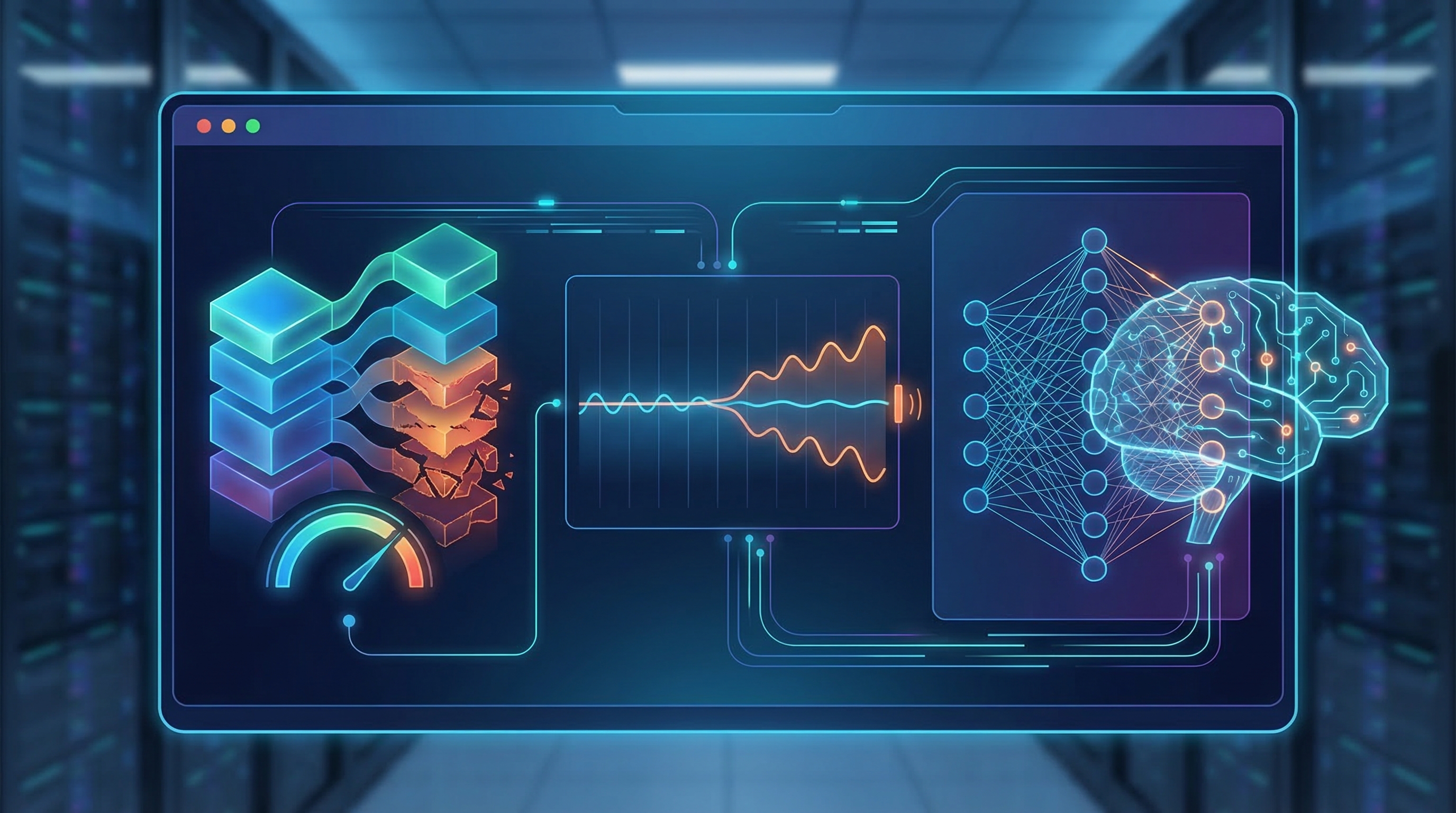
The Real Case of the Epic Sepsis Model
The Epic Sepsis Model (ESM) is a notorious example of how lack of observability can lead to disastrous results. Initially with high accuracy, the model, embedded in a healthcare system, showed a significant drop in performance when independently validated. The absence of drift monitoring in input data, such as changes in medication codes and laboratory patterns, contributed to this degradation. Observability would have alerted about these signals, allowing for proactive correction.
The Five Pillars of AI Observability
To implement effective AI observability, you need to consider five fundamental pillars:
Data Quality Monitoring: Verify the integrity, consistency, and accuracy of input data.
Model Performance Monitoring: Track metrics such as precision, recall, and F1-score, using proxy metrics when direct feedback is delayed.
Explainability and Interpretability: Understand why the model made a particular decision, using techniques such as SHAP, LIME, and attention.
Fairness and Bias Monitoring: Identify and mitigate biases that may lead to discriminatory results.
Lineage and Provenance Tracking: Record the entire model lifecycle, from training data to the deployed version.
How about exploring tools that help you ensure data quality and model performance? Discover Toolzz AI and see how we can help you.
Implementing Observability with Toolzz
Toolzz offers solutions that simplify the implementation of AI observability. With our AI Agents, you can continuously monitor your models' performance, detect data drift, and ensure fairness of results. Additionally, our no-code chatbots can be integrated to alert teams about anomalies and provide actionable insights. Toolzz Bots allows you to create automated workflows to investigate and correct issues quickly and efficiently, minimizing the impact on your business.
By investing in AI observability, you not only ensure the reliability of your AI systems but also maximize the return on your investments and build a solid foundation for continuous innovation.
See how easy it is to create your AI
Click the arrow below to start an interactive demonstration of how to create your own AI.
























.webp)