AI Agents in Email: Security Risks and the Future of Automation
An exploration of the security risks associated with using AI agents to automate email management, including the threat triangle and mitigation strategies for protecting sensitive information.
AI Agents in Email: Security Risks and the Future of Automation

March 16, 2026
The use of artificial intelligence to automate routine tasks, such as email management, has been gaining popularity. The promise of an intelligent assistant capable of filtering messages, drafting responses, and even scheduling meetings is tempting for those who feel overwhelmed by the volume of digital information. However, this convenience comes with significant security risks that need to be carefully considered.
The Attraction of Automation and the Underlying Dangers
The avalanche of emails, combined with the increase in other communication tools like Slack and Discord, can be overwhelming. The idea of delegating email management to an AI agent is appealing, as it frees up time for more important tasks. These agents can access your inbox, analyze content, prioritize messages, and even respond on your behalf. However, this same capability that makes automation so useful also makes it a target for cyberattacks.
The Threat Triangle: Untrusted Content, Sensitive Data, and External Communication
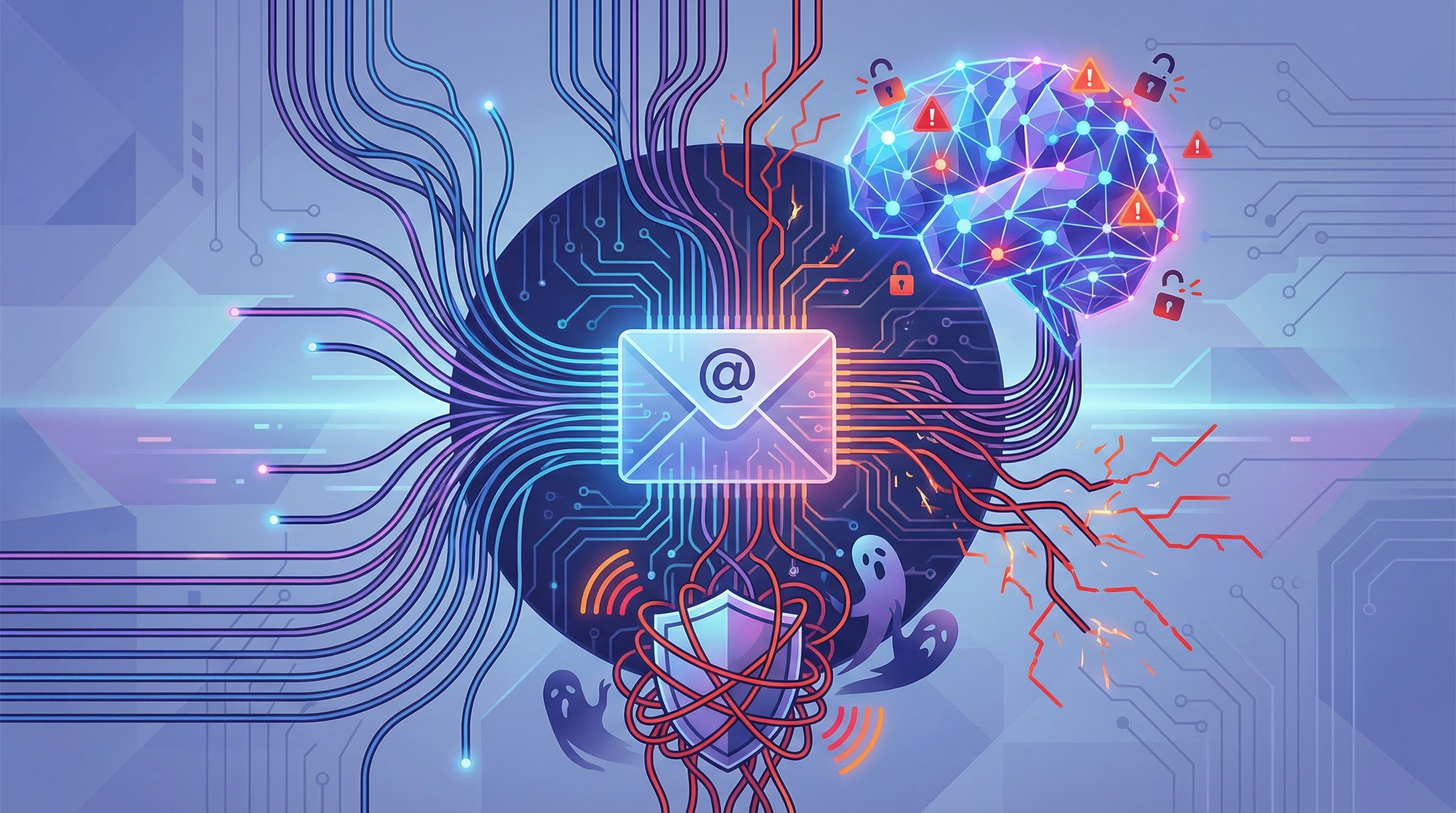
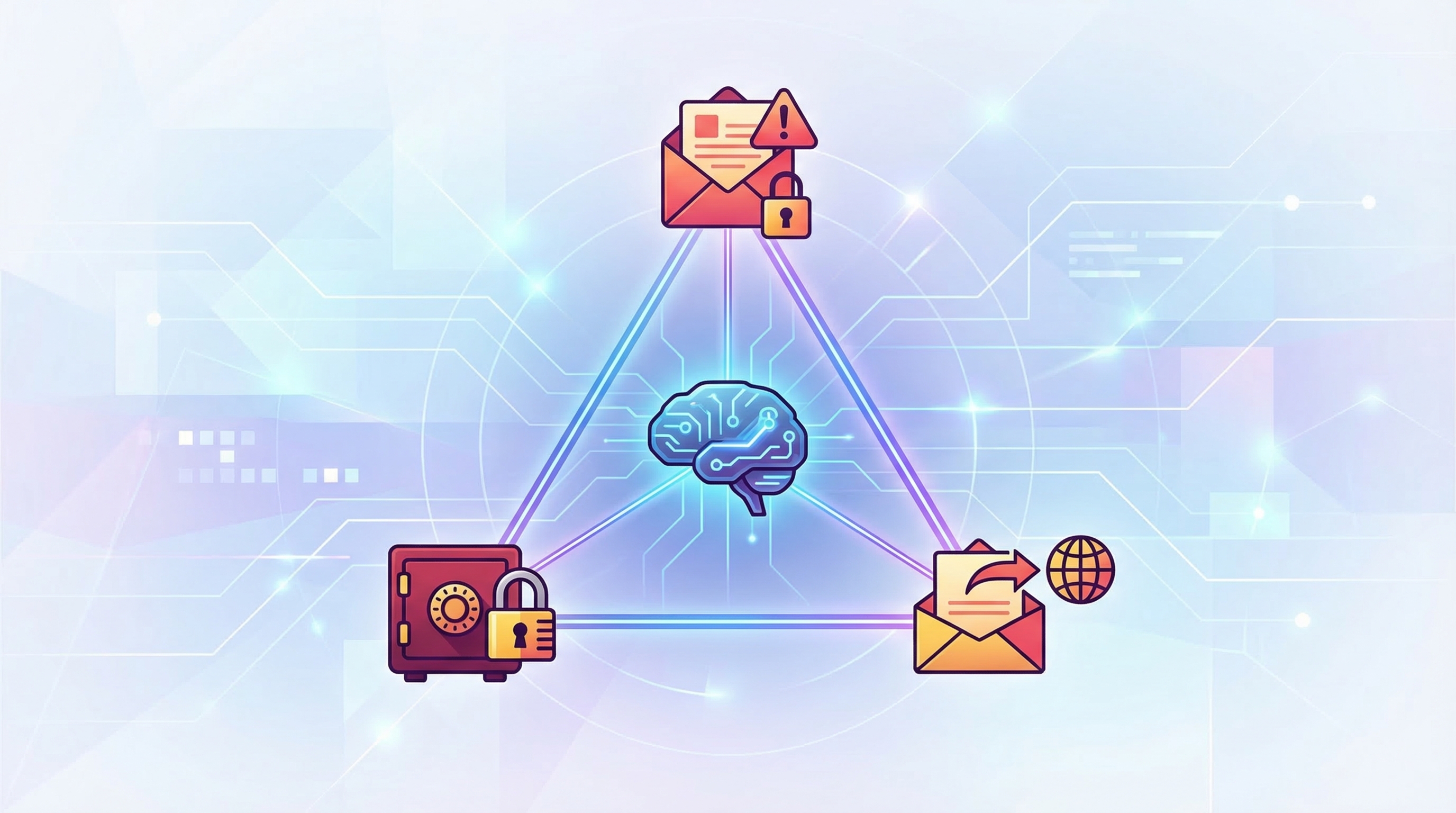
One of the main risks lies in what has been called the "Threat Triangle": access to untrusted content, handling of sensitive information, and the capability for external communication. AI agents, by their very nature, need to process a large amount of data, including potentially malicious emails. The combination of unrestricted access to your inbox and the ability to send emails on your behalf creates a perfect opportunity for phishing attacks, identity theft, and other fraudulent activities. The vulnerability is even greater when we consider that many password reset flows are managed through email.
Mitigating Risks: The Black Box Approach
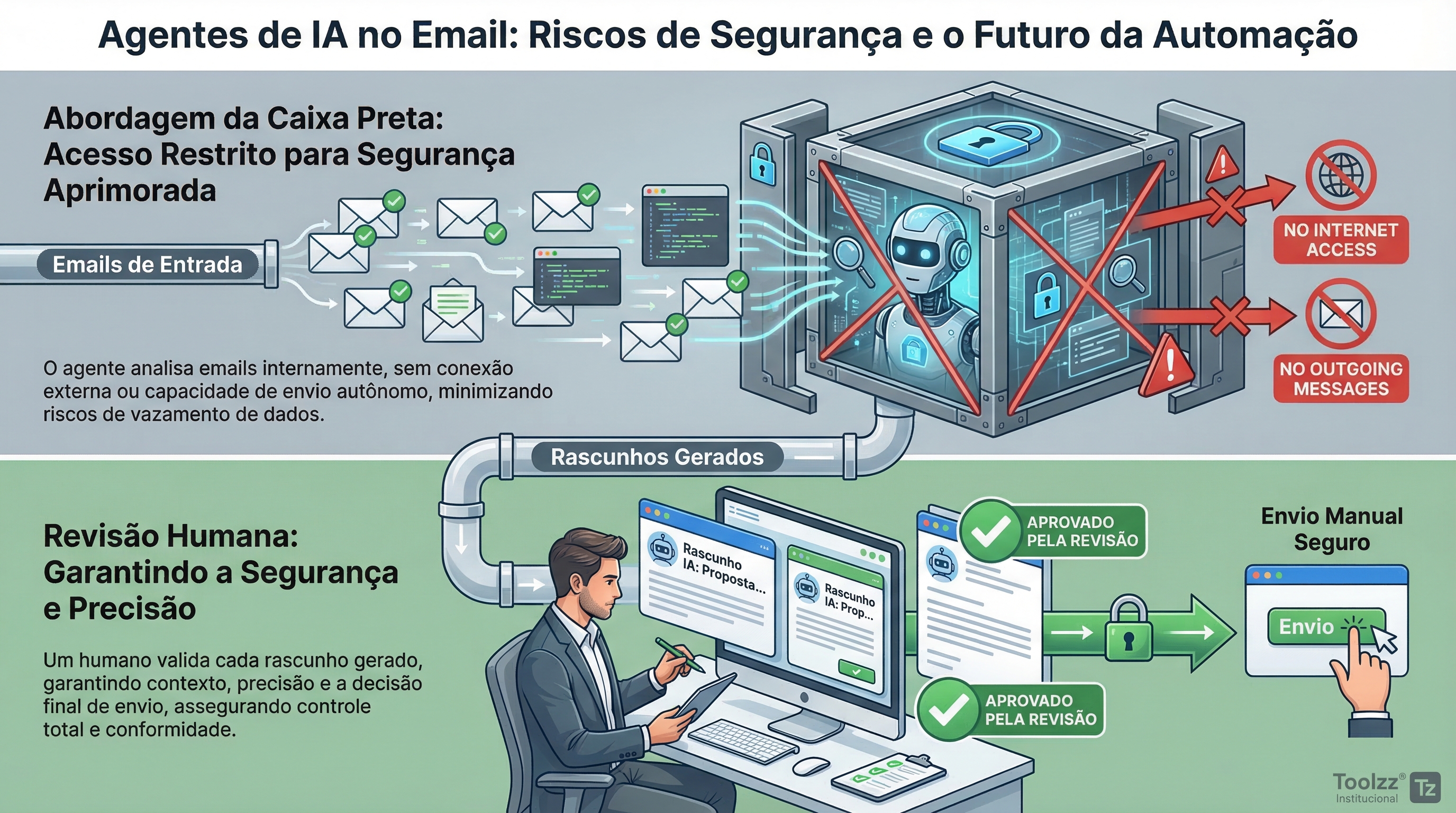
One way to mitigate these risks is to limit the AI agent's access. A promising approach is to create a "black box" environment, where the agent has read-only access to your emails, without the ability to connect to the internet or send messages. In this scenario, the agent can analyze email content and generate draft responses, but these drafts need to be reviewed and approved by a human before being sent. By removing the external communication capability, the agent is prevented from performing harmful actions. While this approach reduces the agent's capability, it significantly increases security.
Want to know how AI can help you optimize your sales process? Learn about Toolzz's AI SDR Agent and discover how it can transform your approach.
The Importance of Awareness and Responsibility
Although we haven't yet seen large-scale security breaches attributed to the use of AI agents in emails, the threat is real. It's crucial that users are aware of the risks involved and adopt measures to protect their information. Implementing robust security policies, educating employees, and using advanced security tools are essential steps to ensure the security of your data. Additionally, it's fundamental that AI agent developers prioritize security in their projects and implement protection mechanisms against cyberattacks.
Protecting Your Communication with Toolzz AI
Intelligent automation can be a powerful ally in managing your time and optimizing processes. With Toolzz AI, you can create customized AI agents to automate specific tasks, such as email triage, meeting scheduling, and report generation. Toolzz AI offers advanced security features and access control, allowing you to enjoy the benefits of automation without compromising the security of your data. Explore the possibilities of AI agents for support and AI agents for sales to boost your team's efficiency.
Want to see it in practice?
Request Toolzz AI demoSee how easy it is to create your AI
Click the arrow below to start an interactive demonstration of how to create your own AI.






















.webp)