17 Essential Features for Live Chat in 2026
An exploration of the 17 most important features businesses should consider to optimize customer service through live chat in 2026, including AI chatbots, omnichannel integration, intelligent routing, and automation tools.
17 Essential Features for Live Chat in 2026

15 de março de 2026
Customer service has evolved drastically, and live chat has established itself as a crucial channel for immediate and effective communication. In 2026, customer expectations are even higher, demanding live chat solutions that not only meet their needs but also offer personalized and efficient experiences. This article explores the 17 most important features that businesses should consider to optimize customer service through live chat.
The Importance of Modern Live Chat
Live chat has gone from being just a support tool to becoming a channel for sales, engagement, and loyalty. Customers seek quick and convenient answers, and live chat offers exactly that. To stand out in a competitive market, it's essential to invest in features that enhance the user experience and allow service teams to be more productive.
1. Omnichannel Integration
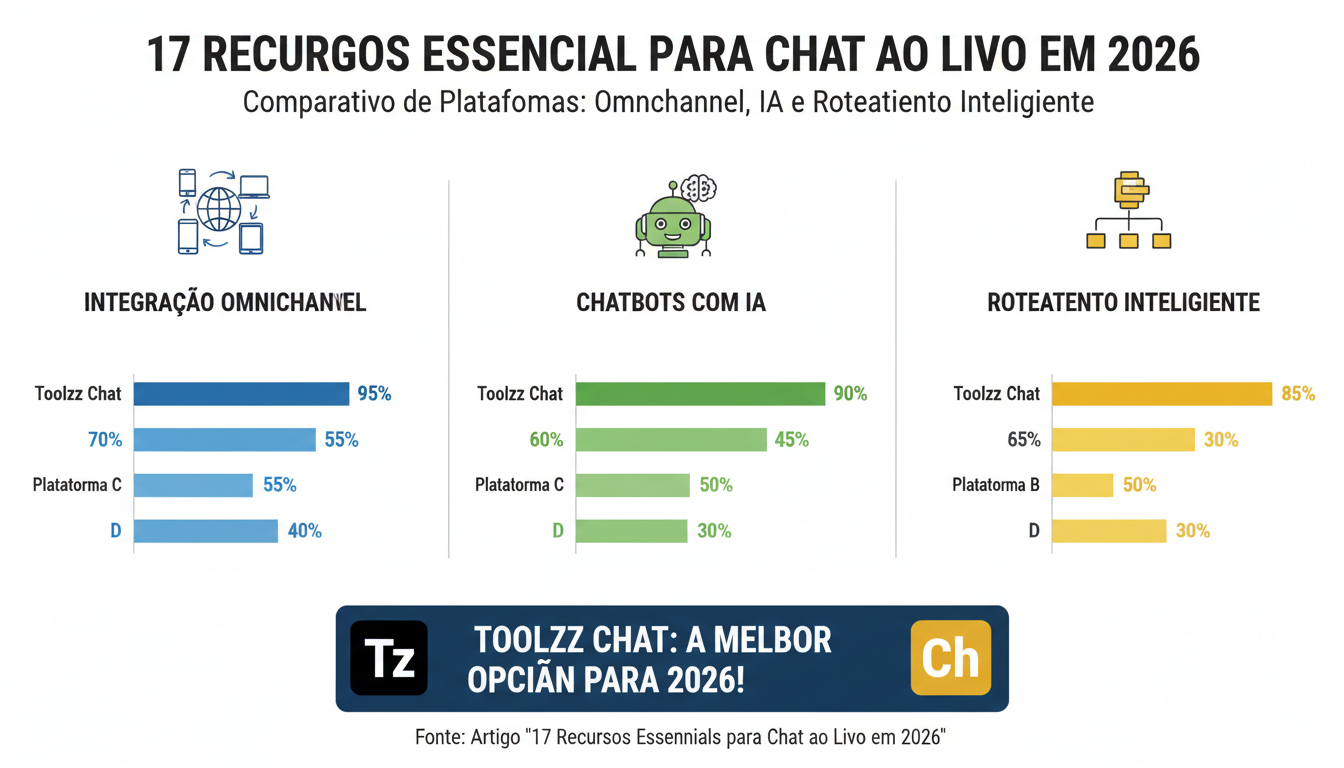
Integrating live chat with other communication channels, such as email, social media, and phone, is essential to offer a consistent and fluid customer experience. An omnichannel platform like Toolzz Chat allows agents to access the complete history of customer interactions, regardless of the channel used.
2. Artificial Intelligence (AI) Chatbots
AI-powered chatbots are capable of answering frequently asked questions, solving simple problems, and directing customers to the right agents. This frees up agents to handle more complex issues and increases service efficiency. Toolzz AI offers advanced customized chatbot solutions for various needs.
3. Intelligent Routing
Intelligent routing ensures that customer messages are directed to the most qualified agents to solve their problems. This reduces wait time and improves customer satisfaction. Systems that analyze skills, availability, and interaction history are crucial.
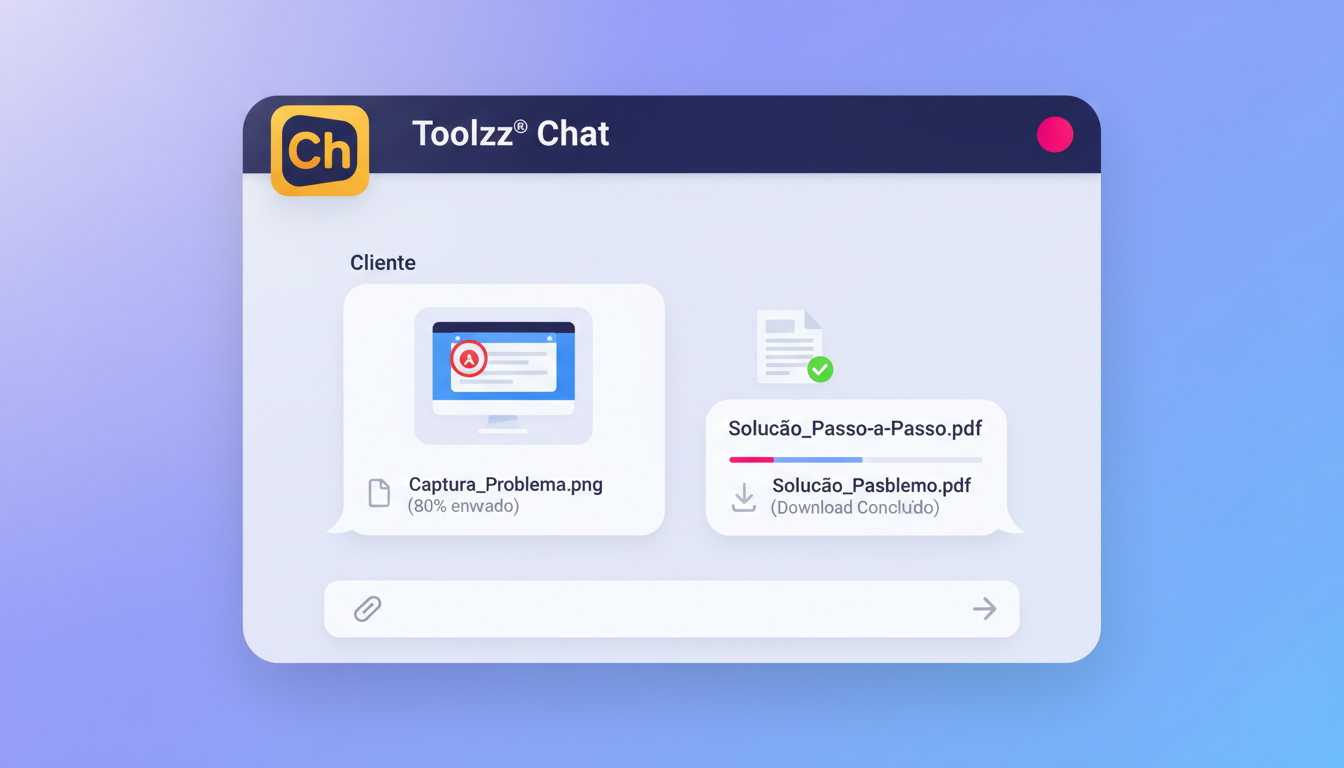
4. File Transfer
Allowing customers and agents to exchange files directly in the chat facilitates the resolution of problems that require documentation or images. This speeds up the process and eliminates the need to send files by email.
5. Conversation History
Access to the complete conversation history with a customer allows agents to understand the context of the problem and offer more personalized service. A well-organized history prevents the customer from having to repeat information.
6. Customer Satisfaction Rating (CSAT)
Collecting customer feedback after each interaction helps identify areas for improvement and measure service effectiveness. CSAT surveys can be integrated directly into live chat.
7. CRM Integration
Integrating live chat with the CRM system allows agents to access important information about the customer, such as purchase history, demographic data, and preferences. This enables more personalized and effective service. Toolzz integrates with various CRMs, optimizing workflow.
8. Pre-Defined Responses
Having pre-defined responses for frequently asked questions saves time and ensures service consistency. Pre-defined responses can be customized to reflect the brand identity.
9. Real-Time Monitoring
Monitoring agent performance in real time allows you to identify bottlenecks and offer personalized training. Metrics such as response time, resolution rate, and customer satisfaction are important.
10. Conversation Transcription
Transcribing live chat conversations allows you to analyze content and identify trends and patterns. Transcription can also be used for training and compliance purposes.
11. Push Notifications
Push notifications inform agents about new messages and ensure that no customer request is lost. Notifications can be customized based on message priority.
12. Multilingual Support
Offering support in multiple languages allows you to serve customers from different regions and cultures. Automatic translation can be integrated into live chat to facilitate communication.
13. Chat Customization
Customizing the appearance of live chat with the brand's visual identity creates a more pleasant experience for the customer. Customization includes colors, logos, and welcome messages.
14. Sentiment Analysis
Analyzing customer sentiment during the conversation allows agents to identify dissatisfied customers and take steps to resolve the issue. Sentiment analysis can be integrated into live chat through AI.
15. Data Security
Protecting customer data is essential. Live chat must comply with data security standards, such as GDPR and LGPD.
16. Reports and Analytics
Generating reports and analytics on live chat performance helps identify areas for improvement and make strategic decisions. Metrics such as conversation volume, average service time, and resolution rate are important.
17. Integration with Automation Tools
Integrating live chat with automation tools, such as workflow systems, allows you to automate repetitive tasks and free up agents to handle more complex issues. Toolzz Bots integrates seamlessly, automating workflows and maximizing efficiency.
Want to implement intelligent chatbots in your live chat? Discover Toolzz Bots and see how automation can revolutionize your customer service.
Conclusion
In 2026, live chat will continue to be a fundamental channel for customer service. Companies that invest in the features mentioned above will be better positioned to offer exceptional experiences and build customer loyalty. Toolzz Chat offers a complete and scalable platform, with all the features needed to meet current market demands. By adopting the right tools and prioritizing the customer experience, companies can transform live chat into a powerful engine for growth.























.webp)